
A useful quote describes a trip, not only a price
A Xinjiang quote should make the operating plan easier to understand before it makes a price look attractive. For international visitors, the important questions are where the trip starts and ends, how each day moves, which overnights are planned, what kind of vehicle and guide support are included, and what changes if a weather-sensitive or remote road cannot be used.
Ask for a clear written route sequence before paying for non-refundable flights or deposits. It does not need to promise an exact minute for every scenic stop. It should show the practical shape of the trip: arrival night, road days, likely meal rhythm, hotel locations, major transfers and a sensible final buffer. A short itinerary that tries to cross too much of Xinjiang is a planning issue, not a pricing bargain.
Confirm the vehicle, luggage and guide mode
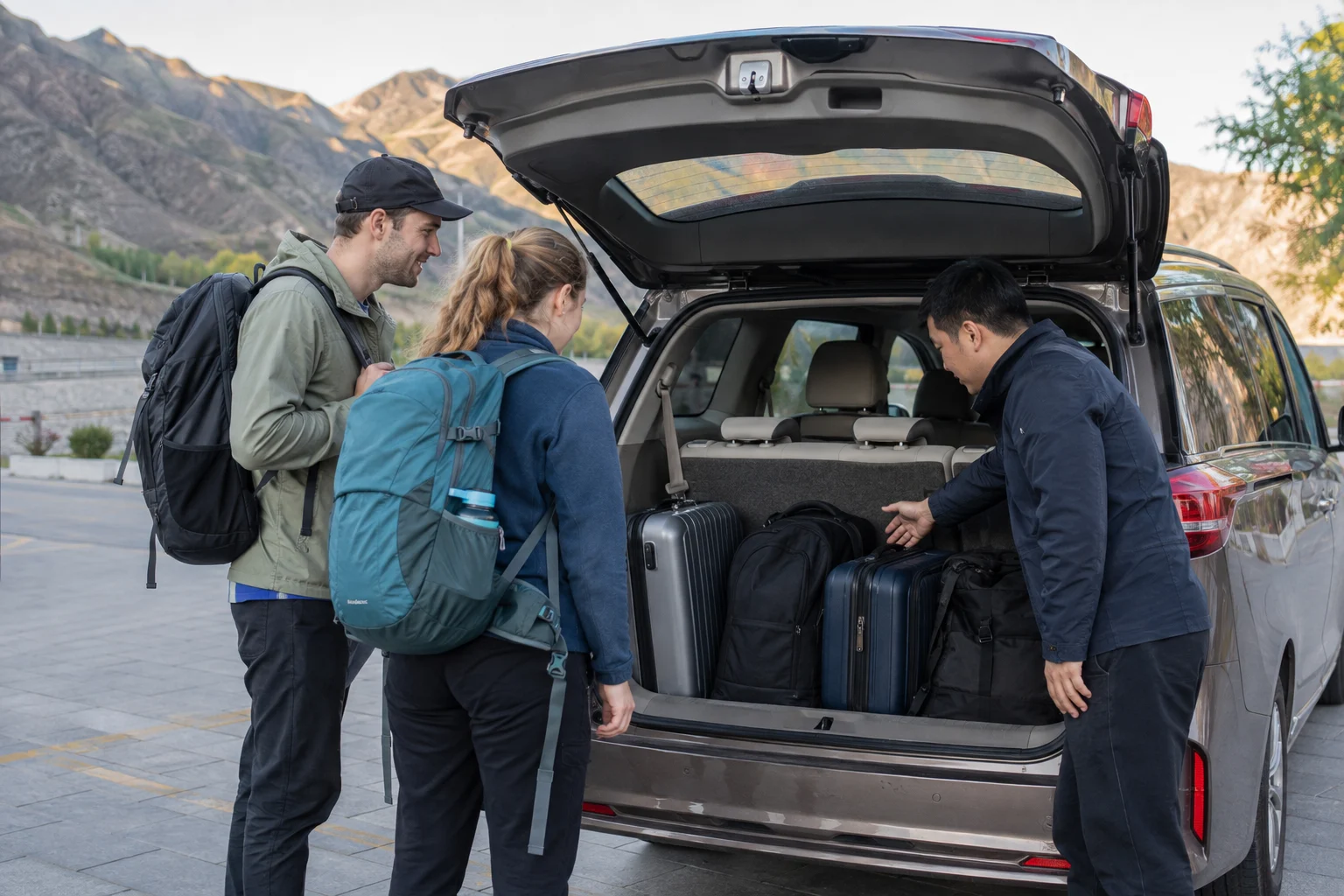
“Private vehicle” is not enough detail for a group carrying multiple cases, camera equipment, a stroller or a large daypack. Ask what vehicle category is planned, the realistic passenger and luggage capacity, and whether the vehicle is used for every road segment or paired with a scenic-area shuttle. Share the actual group size and luggage expectation rather than assuming there will be room for several oversized cases.
Also ask who provides day-to-day support. A driver, an English-speaking guide, a local guide for a particular visit and a remote planning contact are different roles. The useful quote states what is included on each sector and what language support is confirmed. If the route uses a selected small group, ask how the shared pace, pick-up arrangement and maximum group range affect the day.
Read the hotel plan night by night
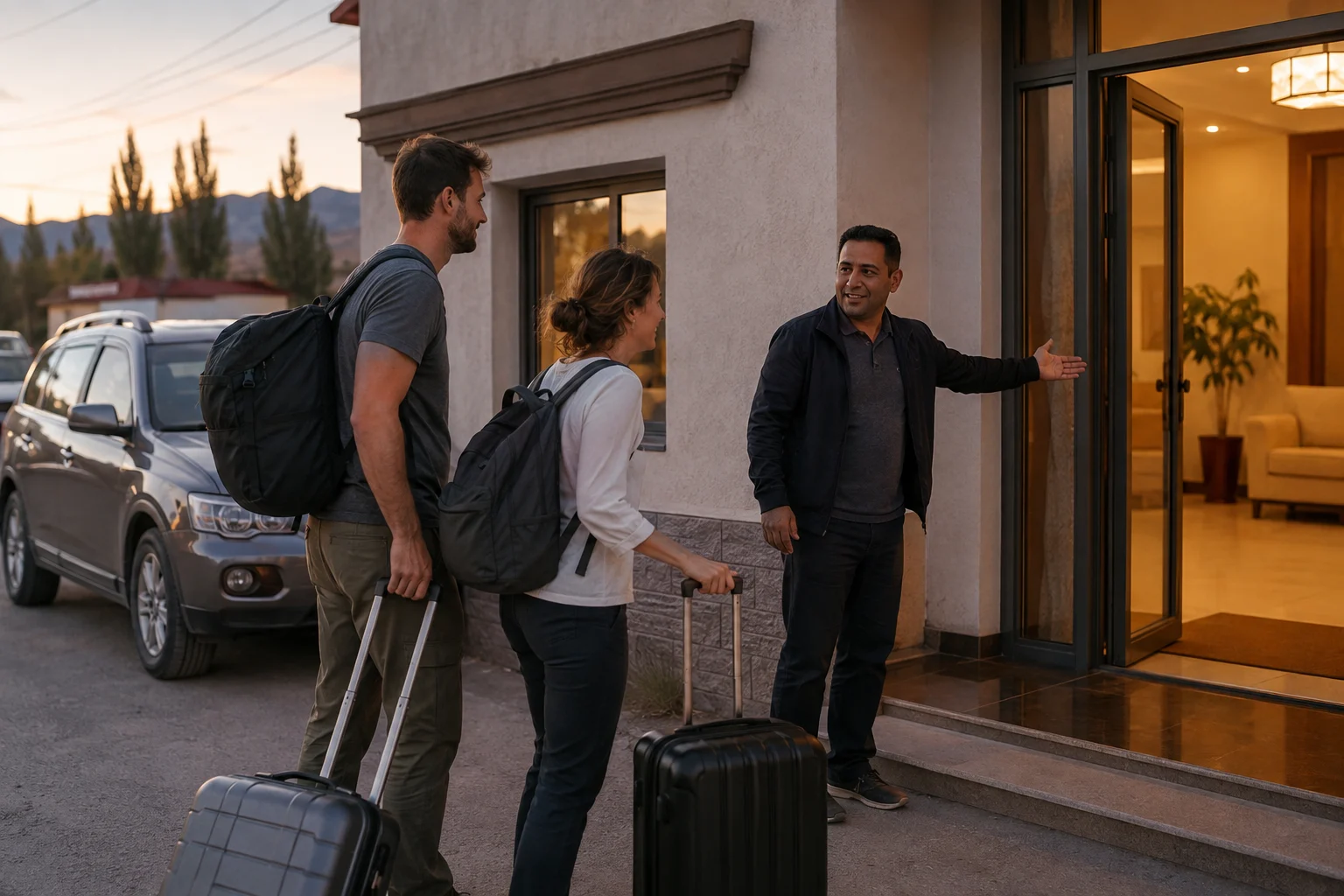
A hotel line in a quote should answer more than “included” or “four-star equivalent.” Check the city, town or route position for each night, expected arrival window, room and bed request, and whether the accommodation is currently suitable for the traveler and booking method. This matters most on a long route, because a property on the wrong side of the transfer can turn a comfortable day into a late arrival.
Some remote overnights may be simpler than a large-city hotel. That can be a sensible tradeoff when it protects the route the next morning. Ask for a practical standard and the material items that affect your group: room arrangement, stairs or lift, late check-in, heating or cooling for the season, and meal timing. Clear expectations are better than a vague promise of luxury everywhere.
Separate included costs from possible extras
The quote should state what the headline price includes: accommodation level, vehicle, driver or guide service, applicable entry arrangements, scheduled transfers and any meals or activities that are explicitly part of the route. It should also state what is normally outside the price, such as personal purchases, optional activities, meals not listed, international transport or a service requested after confirmation.
Do not ask an operator to pretend that every variable is fixed far in advance. Some route elements can depend on current access, dated hotel availability or the traveler's final flight schedule. Instead, ask them to identify the items that are confirmed, the items that are pending, and the practical alternative if one of them changes. That gives you a decision point before payment, not a surprise on the road.
- Night-by-night accommodation plan and room request
- Vehicle and guide mode for each route sector
- Clearly listed included transfers, visits and meals
- Clearly listed exclusions and personal costs
- Named pending items and the practical alternative if they change
Make the no-shopping policy explicit
If avoiding compulsory shopping matters to you, ask for that commitment in writing. A route may include a market, craft street or food stop because it is part of the place; that is different from a retail detour designed to fund the tour. The quote should make clear that there are no compulsory shopping stops and that the itinerary is not priced around a sales commission.
This is also useful for the day's timing. A no-shopping route should spend its pauses on meals, restrooms, views, walking, transfers and the visits you chose. If you want to visit a market or shop voluntarily, treat it as an optional interest rather than a hidden requirement. That keeps the itinerary aligned with the reason you came to Xinjiang in the first place.
Ask what happens when the route changes
A good quote has a calm answer for a changed road, weather interruption, delayed arrival or seasonal access issue. It should identify which part of the itinerary is flexible, which overnight or flight connection is protected, and whether a fallback affects the hotel order, driving time or price. No one can guarantee conditions on a mountain or remote road; the value is in knowing how the day will be handled if conditions are different from the original plan.
Keep the final night in the departure city when a remote or weather-sensitive sector comes before a fixed connection. For an international family, dietary need or mobility requirement, tell the planner before the quote is issued so the backup is designed around the real group rather than added after the route is already tight.
Practical questions
What should a Xinjiang tour quote include?
It should show the route sequence, overnights, vehicle and guide mode, inclusions, exclusions, no-shopping policy and any material route fallback or pending item.
Can I confirm the exact hotel before payment?
Ask for the night-by-night location and current accommodation status. Some exact properties can depend on dated availability, but the route position, room request and practical standard should be clear.
How do I know if the vehicle has enough luggage space?
Share the traveler count and actual luggage before the quote is finalized. Ask for the planned vehicle category and realistic luggage capacity rather than relying on a generic “private car” label.
Should I expect a route fallback in Xinjiang?
For seasonal, mountain or remote sectors, ask what the practical alternative is. A clear fallback is responsible planning, not a sign that the route is unreliable.