Plan meals as part of the route, not an afterthought
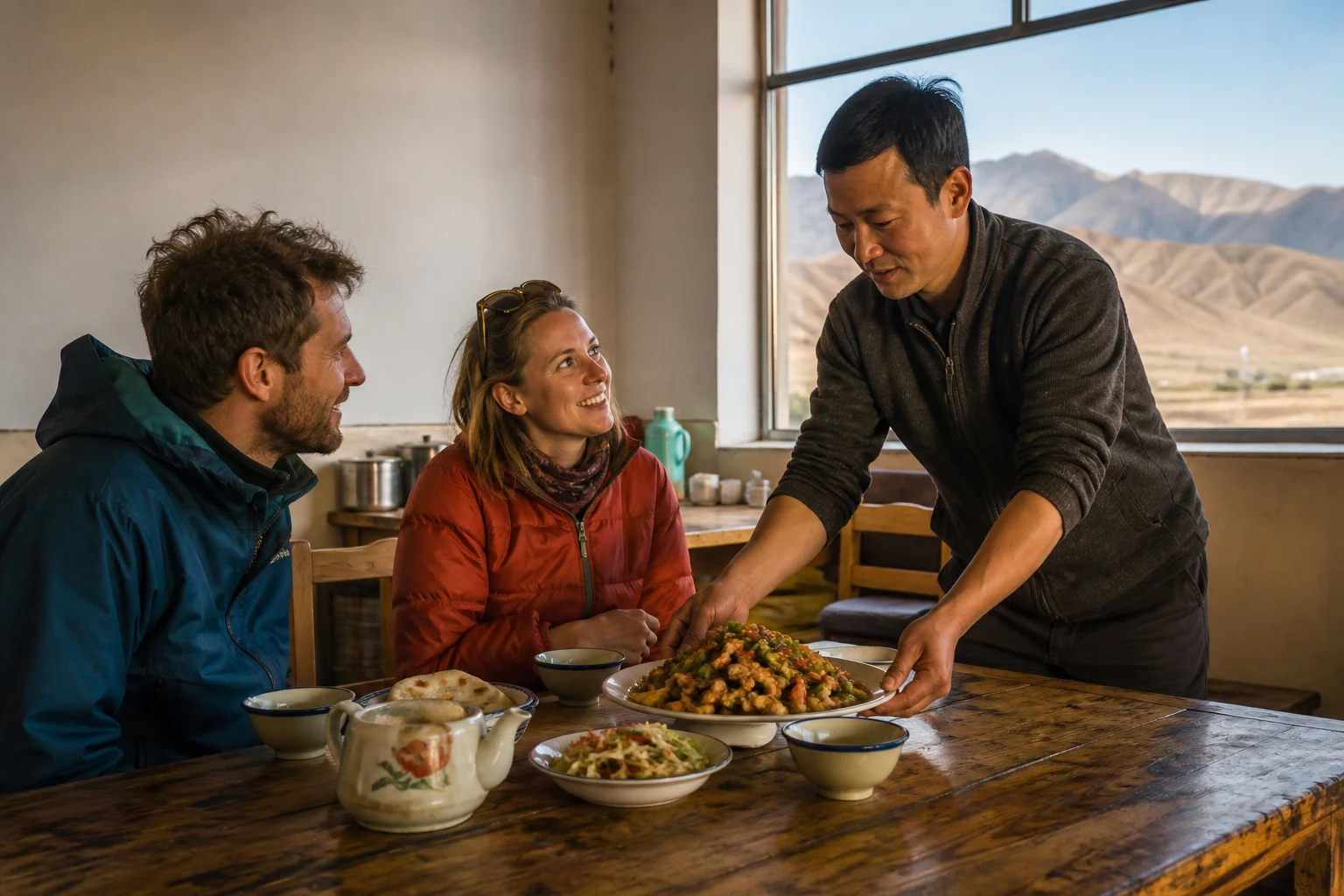
A Xinjiang travel day can cross a long valley, use a scenic-area shuttle or reach a small town later than expected. That is why meal planning belongs in the route conversation, alongside driving time and hotels. A restaurant may be easy to reach in Urumqi, Yining or Kashgar, while a mountain or grassland day may work better with an earlier meal, a simple planned stop and a modest snack you already have with you.
The aim is not to turn every lunch into a fixed timetable. It is to avoid an itinerary that assumes a full meal will appear at exactly the moment a traveler needs it. Ask where the practical meal stop is likely to be, whether the day includes a long scenic segment and what time the group is expected to arrive at the next overnight. This makes a road day more comfortable without trying to over-control it.
Use the meal stop to reset a long road day
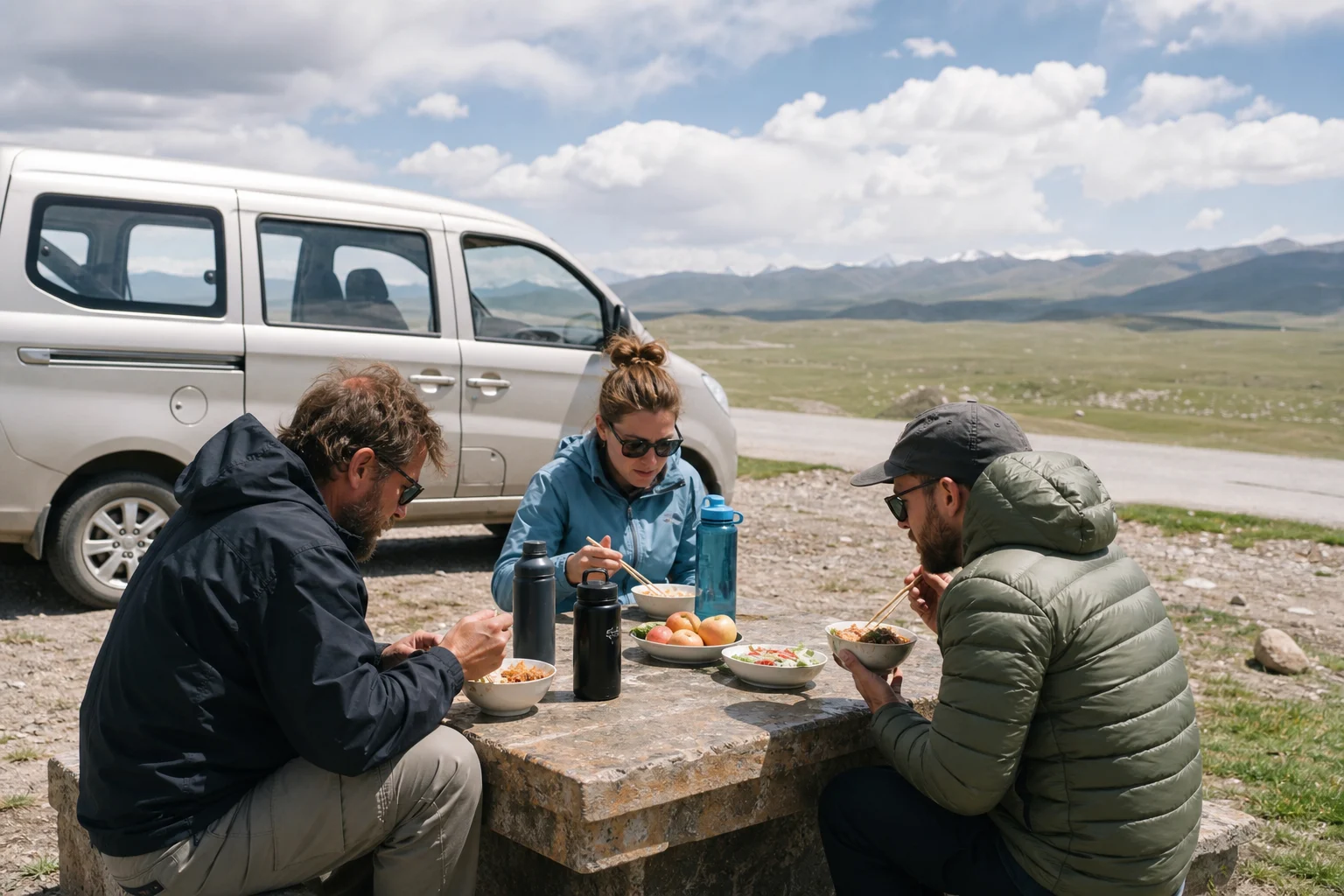
On a well-paced route, lunch is more than food. It is a chance to step out of the vehicle, use facilities, drink water and decide whether the afternoon should remain flexible. A simple place at the right point in the route can be more useful than a more elaborate restaurant that adds an hour of backtracking or turns the hotel arrival into a late-night rush.
Do not expect every stop to offer the same range of dishes or the same service style. Roadside meals can be straightforward, especially away from the main cities. If dining is an important part of your trip, identify one or two city or town evenings where you can allow more time, then keep the long-transfer days practical. The scenery and the meal both feel better when neither is being rushed.
- Ask for the likely meal window, not a promise of an exact minute
- Keep water and a small personal snack accessible in the vehicle
- Use the break for restrooms, stretching and a route check
- Save longer food-focused meals for a town or city evening when possible
Share dietary needs before the route is priced
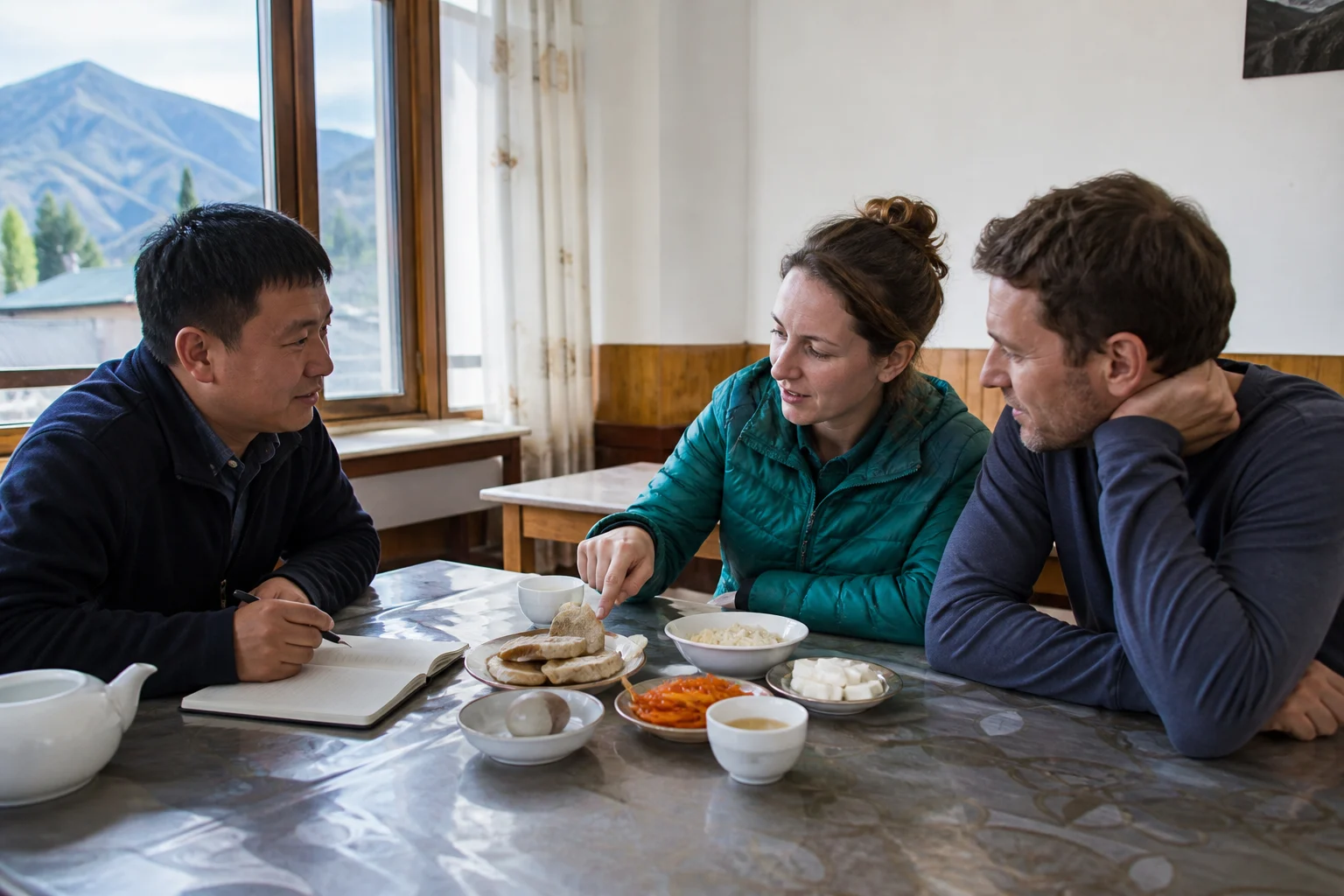
Tell the planner about dietary preferences, religious requirements, vegetarian or vegan needs, food allergies and child-specific routines in the first inquiry. The useful message is specific and practical: what must be avoided, what is a preference, how serious an allergy is, and whether you can bring your own backup snacks. This gives the operating team time to assess the exact route rather than discovering the requirement at a remote lunch stop.
No operator should promise an allergy-safe kitchen or a perfect substitute everywhere on a long Xinjiang route. Ingredient handling, labels and kitchen separation can vary, particularly in small towns and remote areas. For medically significant needs, carry the food, medication and written instructions you personally rely on, consult your clinician before travel and ask whether the planned route is suitable before paying for non-refundable transport.
Understand the difference between a preference and a guarantee
A clear request lets a planner aim for dishes that fit your preference, arrange a useful stop or suggest bringing a backup. It does not create a guarantee that every restaurant has a particular ingredient, can change a recipe, or can prevent cross-contact in a shared kitchen. That distinction matters most for severe allergies, strict medical diets and travelers who need a known packaged product.
Be honest about your flexibility. A traveler who is happy with simple vegetarian dishes, rice, bread, fruit or familiar snacks may have more options than someone who needs every meal to follow a precise restriction. Neither is a problem, but the itinerary, meal timing and what you carry should match the real need. Discuss alternatives before departure rather than treating a dietary request as a detail to solve at the table.
- List foods to avoid and foods that are acceptable
- State whether a request is a preference, a religious requirement or a medical concern
- Bring trusted shelf-stable backup items for long road days
- Ask the operator what is realistic for the confirmed route, not Xinjiang in general
Keep a small backup without carrying a second pantry
A few familiar items make long travel days easier: suitable snacks, a refillable bottle, a cup or spoon if useful, and any product you cannot comfortably replace on the road. Choose compact, shelf-stable items that do not depend on a refrigerator. The point is to bridge a delayed lunch or a limited roadside choice, not to avoid local meals altogether.
Keep the backup in your daypack, not in luggage at the bottom of the vehicle. Check the practical rules for any flight segment before you travel and replace items after use in a larger town where the choice is wider. If you travel with children, build their usual snack rhythm into the route request so the operator can avoid placing the longest transfer across the most difficult part of the day.
Ask three meal questions before confirming
A practical food plan does not need a long culinary brief. Before confirmation, ask about the approximate meal rhythm on the longest day, the operating team's approach to your stated needs and whether there is a town stop where you can restock suitable items. If the reply is vague, ask for the route sequence and decide whether an extra overnight or a different service mode would make the trip easier.
Meal planning is one more reason to choose a route that has room to breathe. A short itinerary focused on one region is more likely to have good, unhurried stops than a long list of distant attractions. Keep the plan simple, be clear about what matters, and let the day remain flexible around real conditions.
- What is the likely meal rhythm on the longest transfer?
- Which needs can be planned for, and which cannot be guaranteed?
- Where can suitable snacks or simple supplies be replenished?
- Does the route leave enough time for a proper evening meal and hotel arrival?
Practical questions
Can a Xinjiang tour arrange vegetarian or vegan meals?
Share the requirement early. The operating team can assess practical options for the confirmed route, but availability and kitchen practice can vary, especially away from the main cities. Carrying simple backup food is sensible for long road days.
Can an operator guarantee an allergy-safe meal?
Do not assume a guarantee, particularly in small or shared kitchens. Describe the allergy before booking, ask what is realistic for the route, and carry the medical supplies and food backup you personally need.
Should we bring snacks for a Xinjiang road trip?
Yes. A compact supply of familiar shelf-stable snacks can bridge a delayed meal or a limited roadside stop. Keep it accessible in your daypack.
Will every long road day have a restaurant stop?
The workable stop depends on the day's route, current conditions and the group's pace. Ask for the likely meal window and the route sequence rather than assuming identical options on every day.