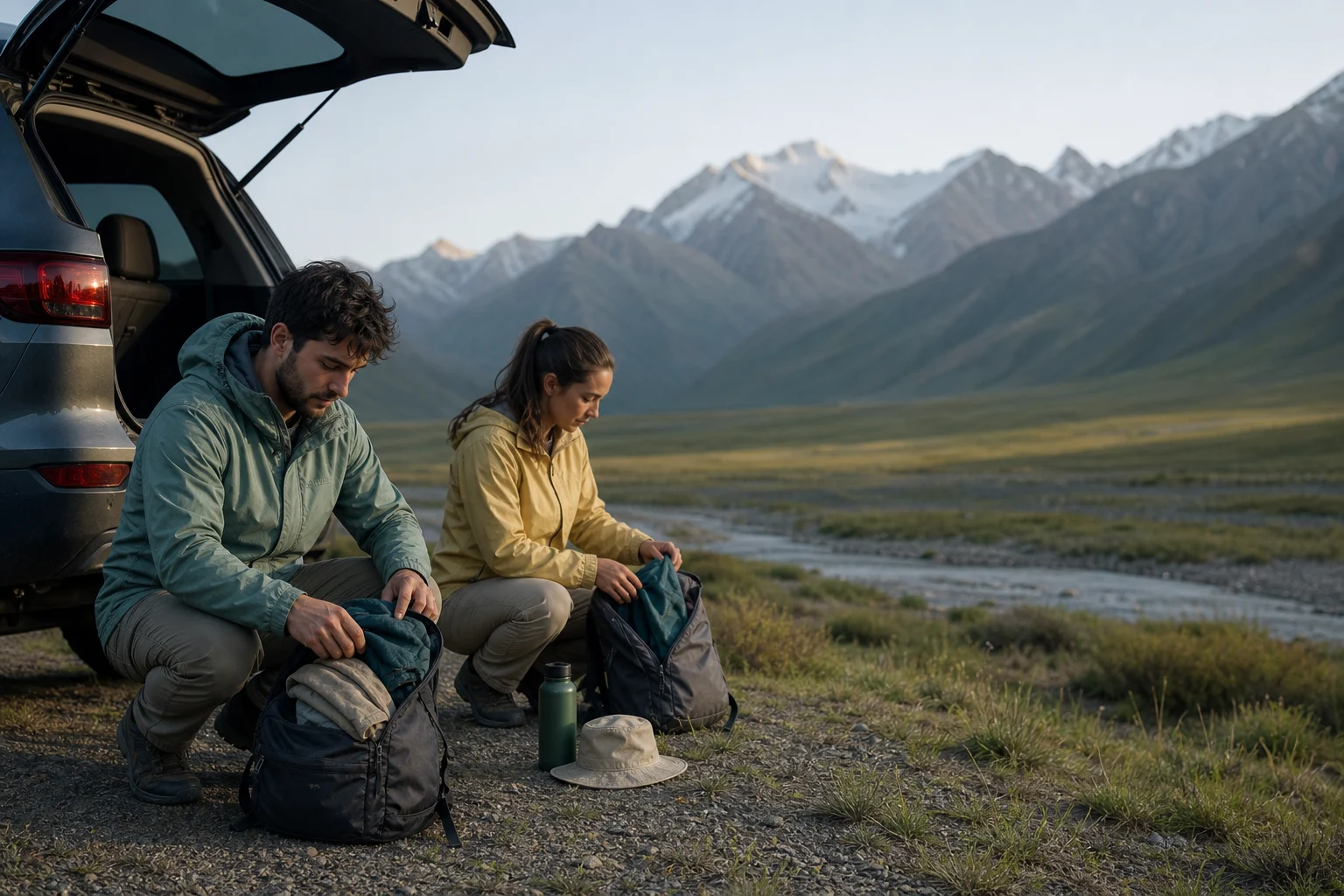
Pack for the route, not one postcard
Xinjiang can combine a cool mountain morning, a bright dry afternoon and a long vehicle transfer within one itinerary. A packing list that works for the Ili valleys may need a different layer strategy from one built around Turpan or a Pamir road. Start with the confirmed route, the highest overnight, the longest drive and the season rather than packing for one iconic photo.
The useful aim is a small, flexible kit: clothes that layer, footwear that can handle ordinary walking and a daypack that keeps the items you need out of the main case. Save space for the practical things that help on a road day instead of bringing a separate outfit for every stop.
Use layers for mountain mornings and changing weather
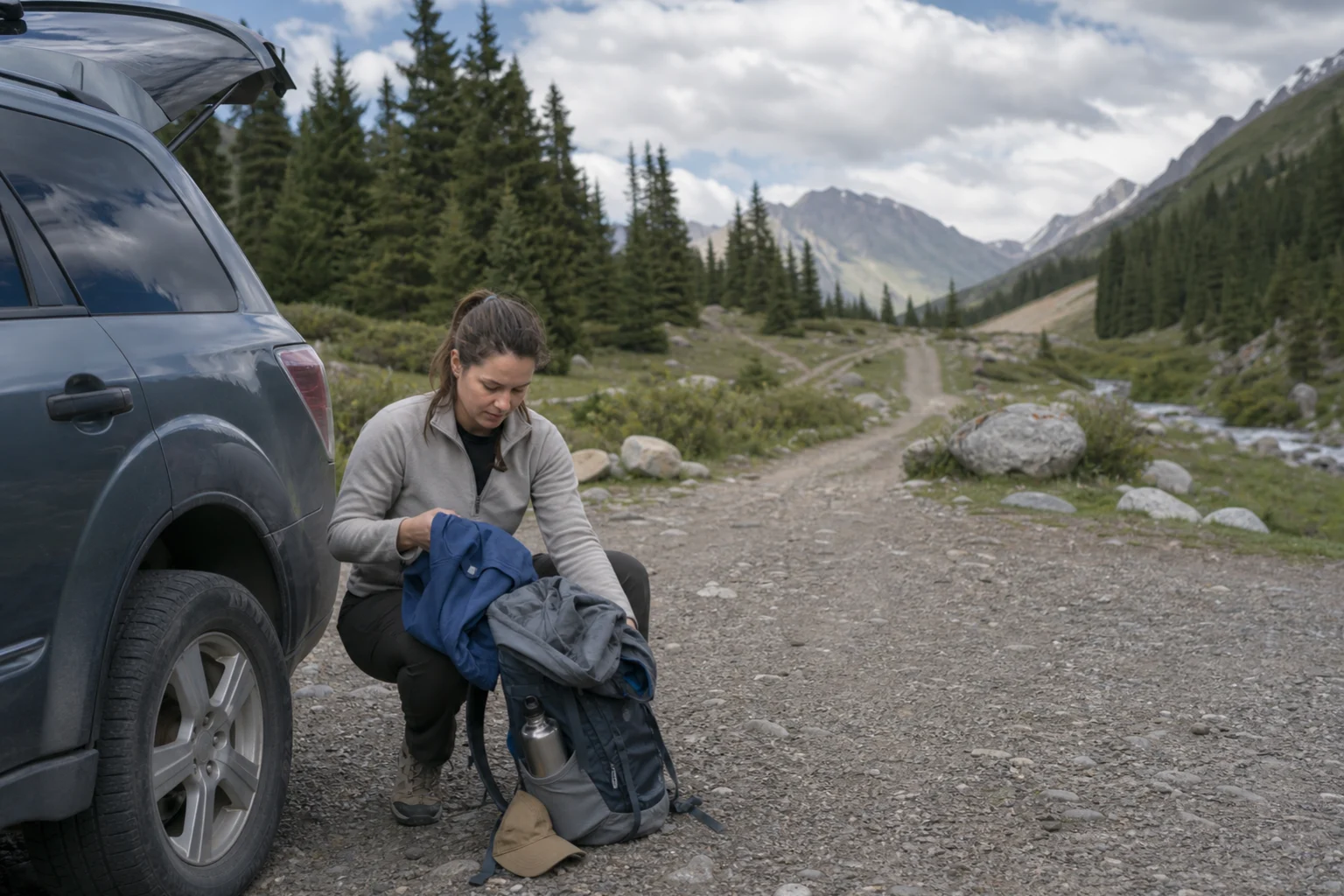
For Tianchi, Ili valleys, Kanas and the Pamir sector, a light insulating layer and a wind or rain shell are more useful than a single bulky coat. Put them in the daypack, not at the bottom of checked luggage. Temperatures and wind can feel different once a route moves above the city or into an exposed valley.
Wear footwear that is already comfortable on uneven paths. Scenic areas may involve shuttle transfers, steps, gravel and short walks even when the main route uses a private vehicle. Break in new shoes before the trip and carry a spare pair of dry socks if the itinerary includes rain, riverside walks or a long day outdoors.
- Light fleece or warm mid-layer
- Packable wind or rain shell
- Comfortable walking shoes with grip
- Small daypack for water, layers and documents
Treat dry heat and bright sun as a daily planning issue
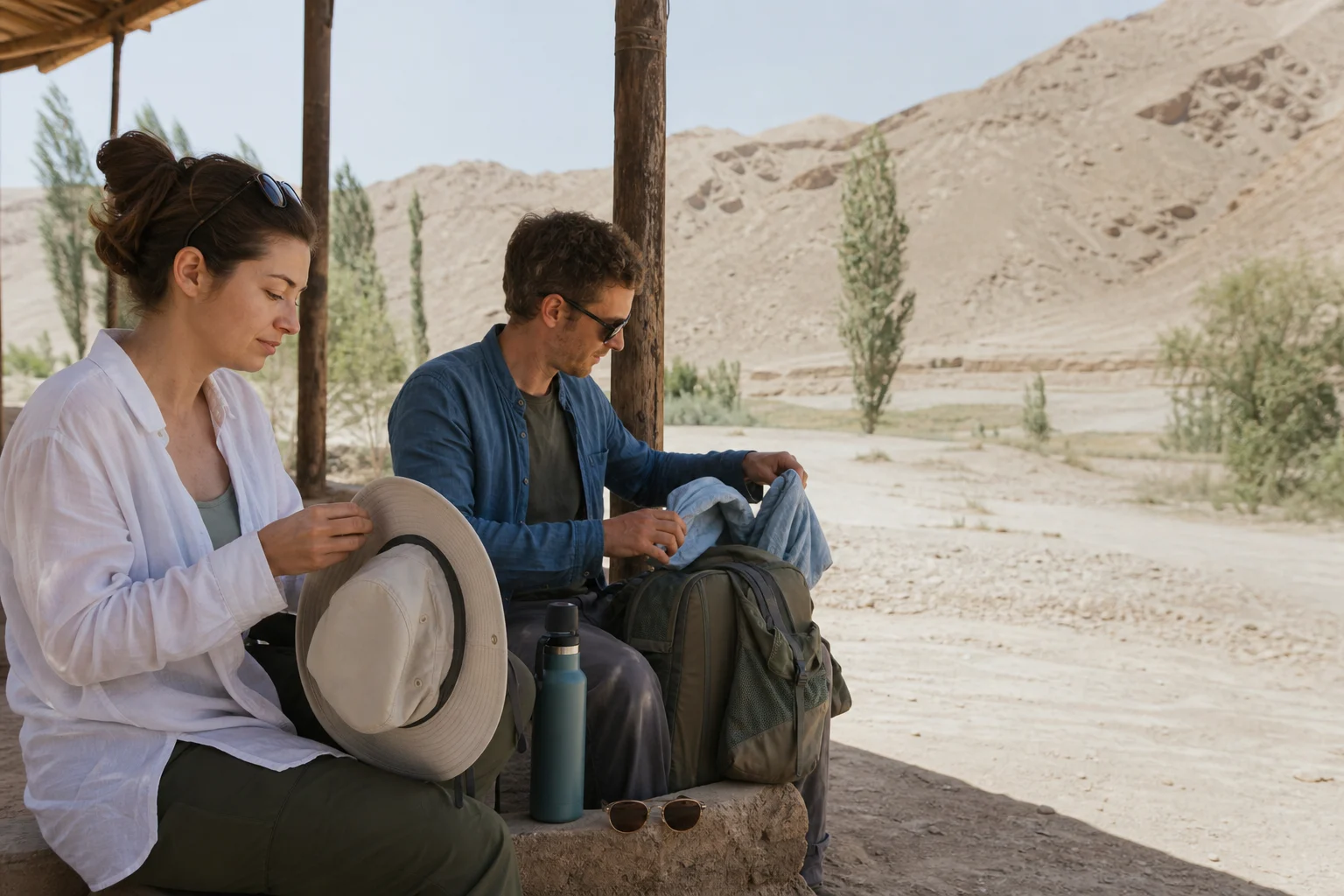
For Turpan, Hotan and other dry or desert-edge sectors, choose breathable long sleeves, a brimmed hat, sunglasses and a refillable water bottle. The goal is not to dress for a desert costume photo; it is to stay comfortable during walking, vehicle stops and exposed sightseeing. A small personal sunscreen supply is sensible because preferred brands and strengths may not be available at every stop.
Put water, lip care, sunglasses and a light cover-up in the same accessible pocket. Road schedules can shift, and a long transfer may turn a planned short stop into more time outdoors than expected. Use a guide or driver for current timing advice, especially when the route includes strong midday sun.
Keep luggage realistic for the vehicle and route
Do not assume that a small-group vehicle has room for several oversized hard cases per traveler. Luggage space depends on group size, vehicle type, scenic-area transfers and whether the route needs equipment or supplies. Ask about the confirmed vehicle and luggage expectation before departure, especially for a 2–6 person departure.
A medium main case or soft-sided travel bag plus one daypack is usually easier to manage than multiple large suitcases. Keep medication, charging cables, one change of clothes, a reusable bottle and the documents needed for the next hotel or transport segment in your carry-on. Never place essential documents in the vehicle boot where you cannot reach them during a stop.
- Confirm the vehicle and realistic luggage space
- Keep documents, medicine and charging items in the daypack
- Use packing cubes or simple pouches for quick hotel changes
- Avoid relying on a driver to carry loose valuables between stops
Build a small road-day kit before the first transfer
Long driving days are easier when the essentials stay with you. Pack a charged power bank, charging cable, reusable bottle, tissues, hand sanitizer, snacks that suit your own diet, sunglasses and any motion-sickness or personal medication you normally use. This is not a substitute for medical advice; it simply prevents a basic comfort item from being inaccessible during a transfer.
Download or save the trip confirmation, hotel names and key contacts before leaving reliable Wi-Fi. Keep a paper note of the first and last hotel as a backup. If you need a particular adapter, medication or dietary item, ask the operating team what is practical for your exact route rather than assuming it can be found at a remote stop.
Confirm the final packing list after the route is checked
The final list should come after the route is confirmed. A five-day Urumqi and Turpan trip, a Yining grassland circuit and a Pamir route do not need the same luggage strategy. Ask for the current longest driving day, expected walking, highest point, hotel changes, guide mode and any scenic-area shuttle segments. Then edit the packing list to the actual trip rather than adding everything “just in case.”
- Route, dates and gateway
- Highest or most exposed day
- Longest road day and hotel-change count
- Vehicle and luggage expectation
- Walking pace, guide mode and current road fallback
Practical questions
Do I need a heavy winter coat for every Xinjiang trip?
No. The right warm layer depends on the route, elevation and month. A flexible insulating layer plus a wind or rain shell is usually more useful than packing one heavy item without checking the itinerary.
Can I bring a large suitcase on a small-group Xinjiang trip?
Ask before departure. Luggage capacity depends on the confirmed vehicle, group size and route logistics, so do not assume space for several oversized cases.
What should stay in my daypack on long transfers?
Keep documents, medication, water, a charging cable, a power bank, sun protection and one practical warm or rain layer with you rather than in the main luggage.
Should I buy gear after arriving in Xinjiang?
Bring the essentials you rely on. Local availability can vary by city and route, particularly away from large urban stops.