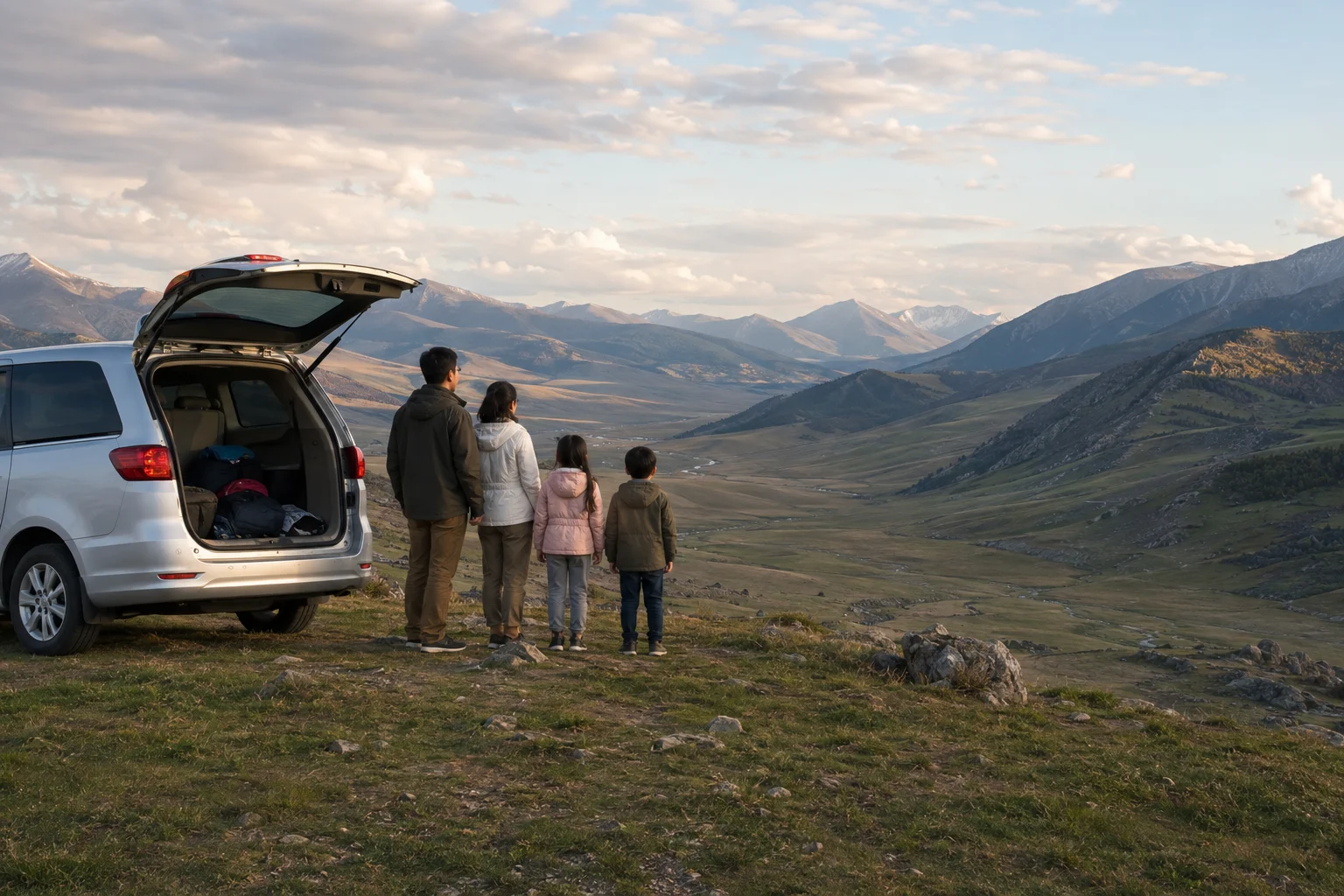
Choose one region that gives the family room to breathe
Xinjiang is rewarding for families when the route is built around one main region rather than a list of far-apart highlights. A compact Urumqi and Turpan plan, an Ili valley circuit or a Kashgar-and-Pamirs focus can each work when the number of usable days is honest. Trying to add every gateway usually creates extra hotel changes and long transfers that children experience more strongly than adults do.
Start with the child's normal rhythm: the time they need for breakfast, a reliable pause, an early night and a slower morning after a travel day. Then compare the region, arrival city and route. The goal is not to remove every long drive; it is to make the long day the exception rather than the shape of the whole trip.
Build the day around energy, not the map
A family road day includes more than driving time. It includes getting children ready, restroom breaks, snacks, an unhurried lunch, short walks, settling into the next room and enough sleep for the following day. A map may make a transfer look manageable while the actual door-to-door day becomes too long once all of those parts are counted.
Ask the planner to show the day in sequence: hotel departure, the longest transfer, planned stops, meal window, scenic-area shuttle if relevant and expected hotel arrival. This lets you decide where one added overnight might improve the entire trip. It is better to see fewer places with a calm family than to spend every evening trying to recover from a rushed day.
- Keep the first day after a late flight light
- Avoid stacking a long drive, a major scenic visit and a late hotel change
- Plan the final night near the departure airport or station when a remote road comes before it
- Build in time for an ordinary meal and a quiet bedtime
Make breaks part of the experience
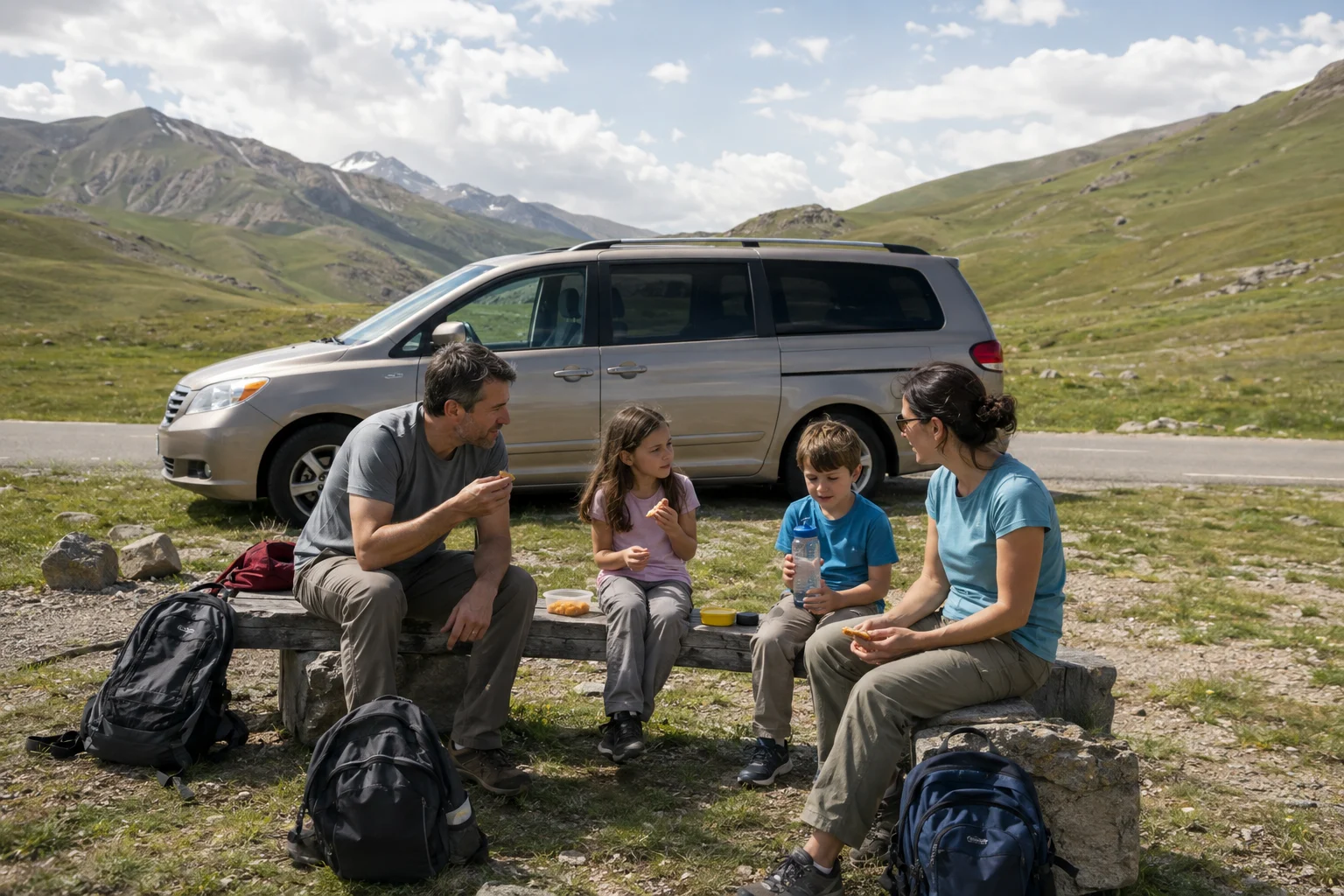
Children do not need every stop to be a major attraction. A short stretch, a simple snack, a view, a chance to use facilities or a few minutes away from the vehicle can reset the day. Keep water, familiar snacks, tissues, a warm layer and small comfort items in the daypack rather than buried under main luggage.
Share food preferences and any important dietary needs before the route is priced. The operating team can assess realistic meal stops for the confirmed route, but a roadside choice will not always look like a city restaurant. Bringing a small backup is sensible. Breaks are for food, views, restrooms and comfort—not retail detours. No shopping stop should be used to subsidize a family itinerary.
Confirm rooms, luggage and the arrival routine
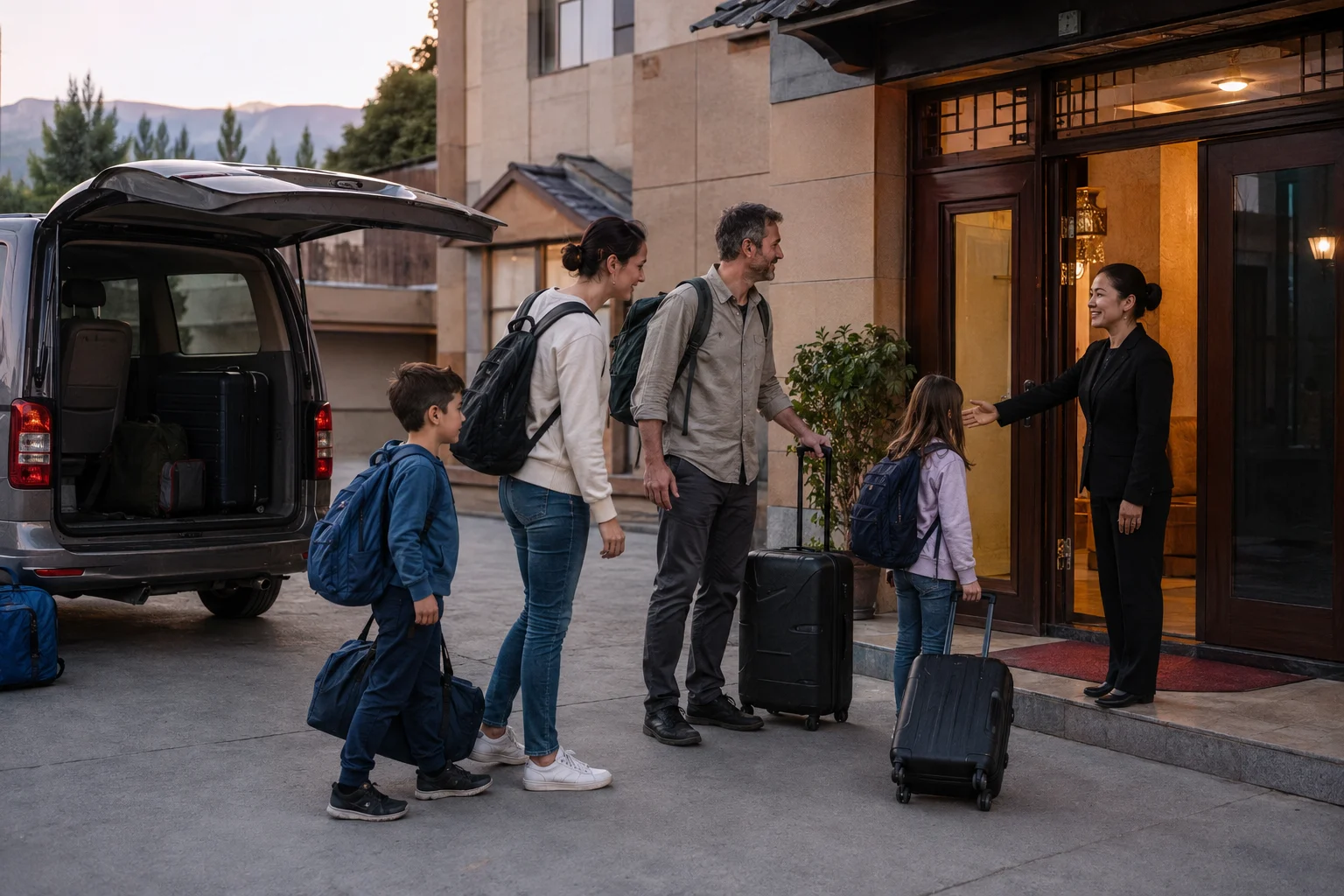
A family room request should be specific, not assumed. Tell the planner the number and ages of children, whether you need separate beds, a cot, a connecting room, a quiet room, a lift or ground-floor access. Those choices can differ from one overnight to the next, particularly when the route moves beyond the main cities. Ask for the practical accommodation standard and the likely arrival time as part of the same route confirmation.
Keep luggage manageable for the vehicle and hotel changes. One accessible daypack per adult can hold the child's layers, snacks, water, charging items and a change of clothes, while the main cases stay in the vehicle. If stair access, a long walk from parking or a late arrival would be difficult for your family, say so before the plan is finalized.
Confirm the vehicle request before payment
For families, the vehicle is not just transport. Confirm the realistic passenger and luggage capacity, whether the child's age and size require a particular restraint or seat arrangement, and whether that request can be met on the exact route and dates. Do not assume a familiar car-seat model, a booster or extra luggage room is automatically available at every location.
Give the team the details they need: traveler count, each child's age and approximate size, luggage, any stroller or mobility item, and whether you need an early bedtime or a slower start. A private vehicle can make the route more flexible, but it does not shorten mountain roads or remove current road, weather and safety conditions. The best plan is one that keeps these constraints visible from the first quote.
- Child ages and approximate sizes for any restraint request
- Total luggage, stroller or other bulky items
- Any motion-sickness, meal or rest timing concern you want the team to plan around
- A practical plan if weather or a long transfer changes the day
Keep mountain and flight days especially simple
On a route with higher or more exposed scenery, avoid adding extra walking or a major transfer just because the morning feels good. Let the group use the pace that works that day and keep the next overnight realistic. Bring the personal medication and supplies your family normally relies on, and discuss any health or altitude concern with a qualified clinician before travel rather than seeking medical advice from a tour plan.
Before a flight, rail connection or another fixed deadline, keep a buffer. Returning to the departure city the previous night is often the calmer choice after a remote or weather-sensitive road sector. A good family itinerary protects the end of the trip as carefully as the first scenic day.
Practical questions
Is Xinjiang suitable for travel with children?
It can be, when the route is built around one region, realistic road days, suitable overnights and the family's actual rhythm. Share children's ages, travel needs and fixed dates before the route is priced.
Can we request a child seat or booster?
Ask before booking with each child's age and approximate size. Availability and the suitable arrangement need to be confirmed for the exact vehicle, route and dates rather than assumed.
How should we plan food on a family road day?
Confirm the likely meal window, keep water and familiar snacks accessible, and share dietary needs early. A compact backup helps if a practical roadside stop has limited choices.
Should we book a flight after a mountain road day?
Usually keep the last overnight near the departure airport or station when a remote or weather-sensitive road sector comes before a fixed connection.