Choose the overnight stop before the hotel name
A Xinjiang hotel plan should begin with the route, not a list of attractive rooms. The useful question is where the group will actually finish after the day's driving, scenic-area transfer and walking. A hotel that looks ideal on a map can become a poor choice if it adds backtracking, forces a very late arrival or leaves too little time for the next morning's road.
For international visitors, every overnight should be checked as part of the confirmed route. That includes the city or village, the actual property, the expected arrival time and whether the accommodation can accept the traveler for the date and booking method. This is especially important when the route moves away from the main cities or changes after a weather, road or transport adjustment.
Confirm each hotel, not only the first night

A route can include a comfortable city hotel, then a simpler valley stay, then a remote road stop. Do not assume that one successful booking proves the next property will have the same room type, check-in process or international-guest suitability. Ask the operator to confirm the overnight sequence as a set before payment, especially if the itinerary includes the Pamirs, Northern Xinjiang, a small village stay or a long Southern Xinjiang sector.
Be clear about what you need: twin or double beds, a family room, a quiet room, a lift, ground-floor access, a non-smoking room or a realistic location near the next transfer. These requests may not be available at every overnight, so they should be written into the quote as preferences or confirmed inclusions rather than treated as assumptions.
- Exact property or confirmed accommodation standard for every night
- Room and bed arrangement for every traveler
- Expected arrival time after the day's route
- Current international-guest and booking acceptance check
- Any material change if the route fallback is used
Plan late arrivals and early departures honestly
A late flight into Urumqi, Yining or Kashgar is normally a transfer night, not a hidden touring day. Build in enough time to collect luggage, meet the arranged transport, reach the hotel and sleep before starting a mountain, desert or long-road sector. The same rule applies before an early onward flight: keep the final night in the departure city when weather-sensitive roads or a major transfer could affect the connection.
If a road day could run late, choose a hotel plan that still works without rushing dinner, check-in or the next departure. The quote should say whether the arrival transfer is included, who receives the group after a delayed flight and what happens if a current road fallback changes the overnight order. This is more valuable than promising an overly precise arrival time for a weather-sensitive route.
Match your luggage and room routine to the road day
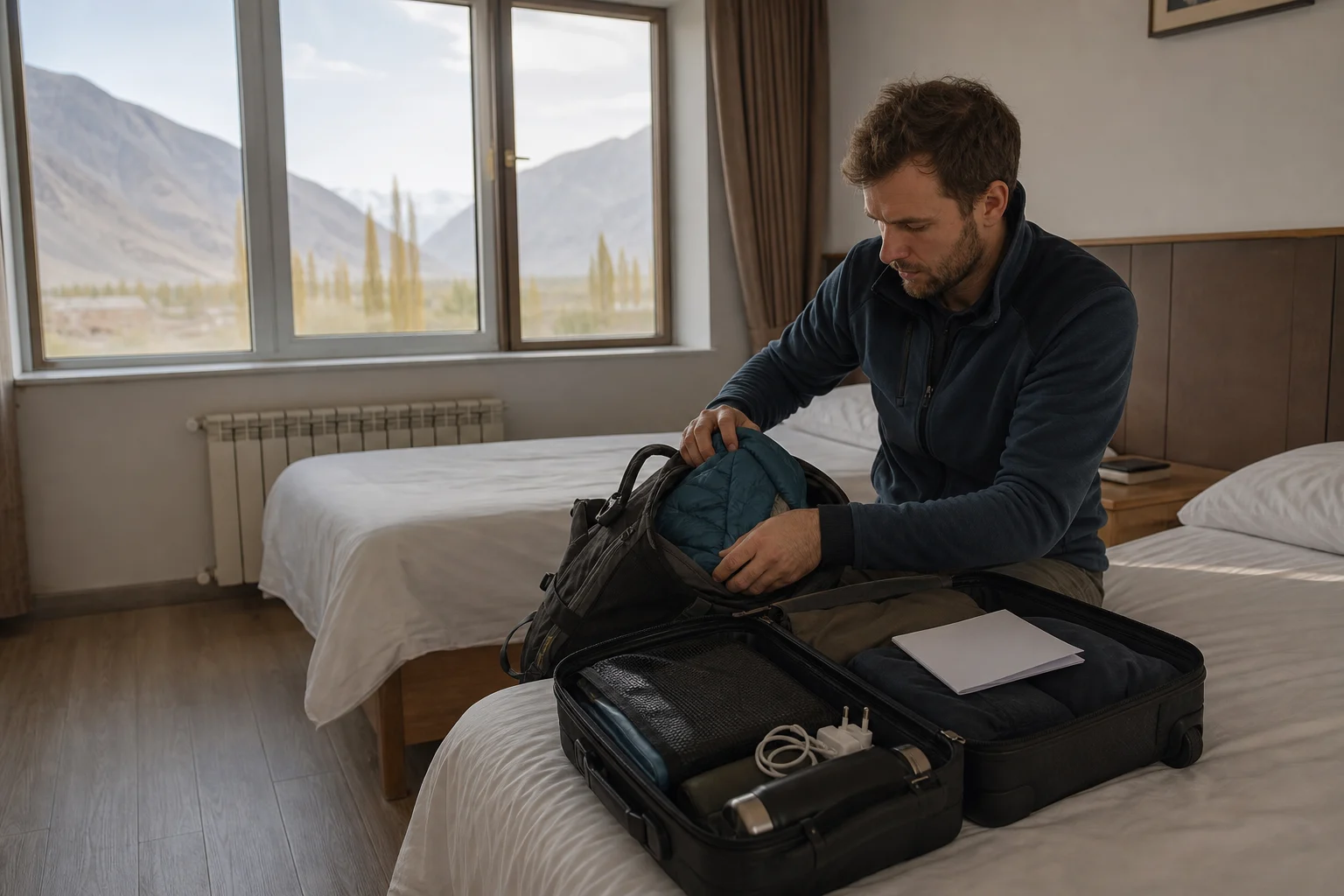
Repeated hotel changes feel easier when you travel with a manageable main case and one daypack. Keep medication, charging equipment, documents, a warm or rain layer and one change of clothes in the bag that stays with you. On a road route, you may not want to unpack every item at each overnight, and a scenic-area shuttle or short walk can separate you from the vehicle for part of the day.
Ask about the practical access between vehicle and room when mobility, children or heavy luggage matter. Small properties can have stairs, uneven surfaces or a short walk from the parking area. This does not make them unsuitable; it simply means the room choice, luggage plan and pace should fit the group.
Expect simpler overnights where the landscape is more remote
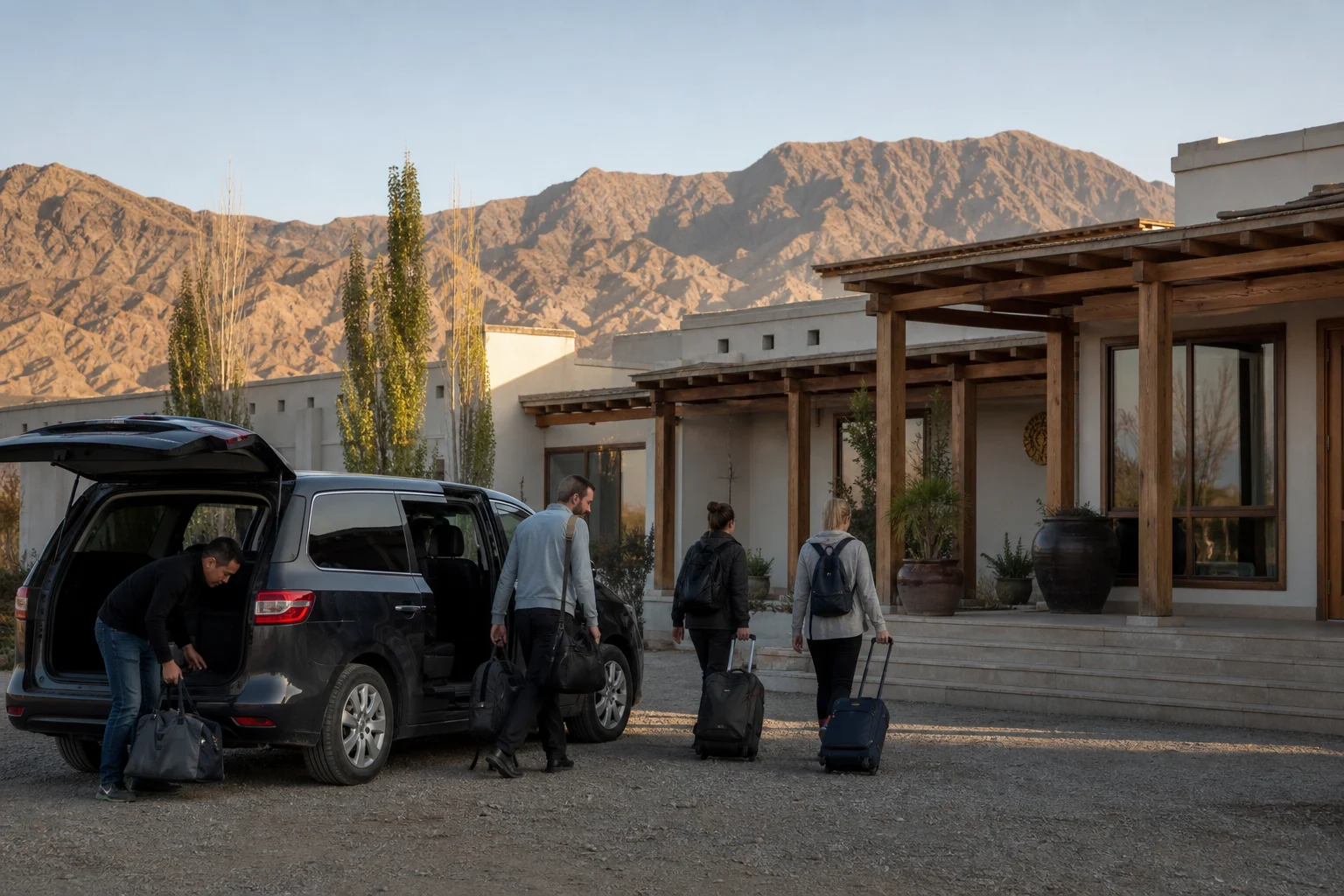
In more remote parts of Ili, Northern Xinjiang, the Pamirs and the southern overland route, the best practical overnight may be simpler than a city hotel. The tradeoff may be fewer facilities, smaller rooms, a different breakfast routine or a basic location that protects the next day's drive. Choose it knowingly, based on the route, rather than expecting an urban hotel standard at every stop.
The most useful confirmation is specific: expected accommodation level, bathroom arrangement if relevant, heating or cooling expectations for the date, luggage handling, meal timing and the effect of a route change. Avoid vague labels that create the wrong expectation. A clear, modest room on the right side of a long road can improve the trip more than a nicer room that adds hours of driving.
Use a short hotel checklist before final payment
Before the final payment, ask for the night-by-night route and confirm the items that matter to your group. The aim is not to demand guarantees a hotel cannot make; it is to identify the few factors that could materially change comfort or route feasibility. If any stop is still pending because of a seasonal road, local availability or a late flight, ask what the practical alternative will be.
Do not send passport numbers or scans through the public inquiry form. Start with nationality, dates, traveler count, room preference and the route. If secure document details are genuinely needed for a confirmed accommodation or route step, the operating team should explain the secure collection method separately.
- Every overnight location and current accommodation status
- Room type, beds and accessibility needs
- Late-arrival or flight-delay transfer plan
- Luggage, vehicle and scenic-area transfer implications
- Secure process for any genuinely required document details
Practical questions
Can I assume every Xinjiang hotel accepts international visitors?
No. Confirm each overnight property for the exact dates and route rather than assuming one city booking applies to every stop.
Should I book non-refundable flights before the hotels are checked?
For a multi-stop Xinjiang route, confirm the workable overnight sequence and route fallback first. This reduces the risk of a costly itinerary change.
Are remote Xinjiang hotels always lower quality?
They may be simpler because of location and route logistics. Ask for the practical accommodation standard and choose knowingly based on the time they save and your comfort needs.
What should I tell the planner before rooms are confirmed?
Share dates, nationality, traveler count, room or bed preference, mobility needs, expected luggage and any late-arrival or early-departure constraints.