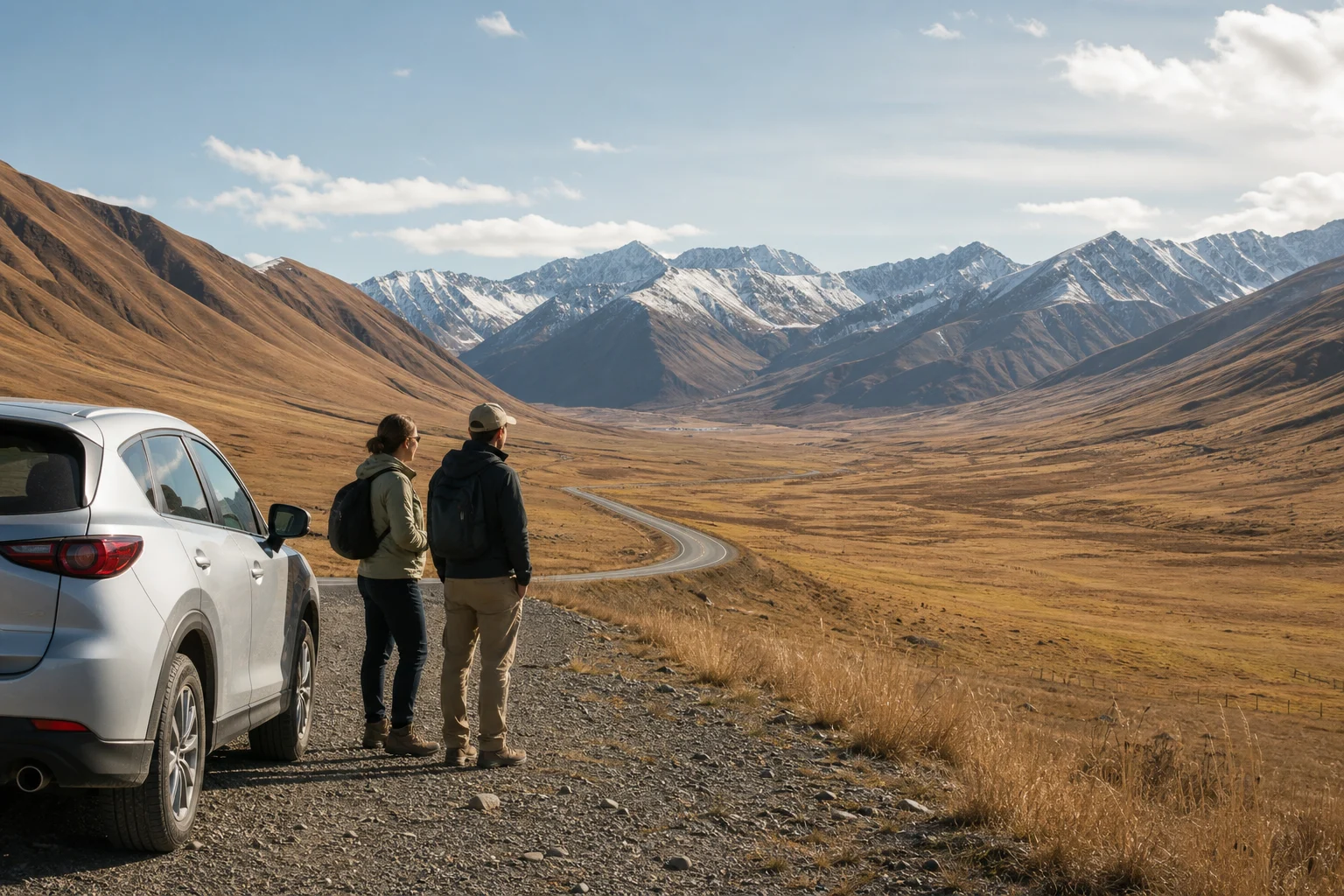
A scenic road is still a road day
A Xinjiang route can look short on a map and still take most of the day. The time is shaped by mountain curves, scenic-area shuttles, meal and restroom stops, photo breaks, road conditions and the final check-in. The point is not to make the itinerary timid. It is to give the landscape enough time without quietly turning every evening into a late arrival.
When comparing routes, ask how the day works door to door: when you leave the hotel, where the useful stops are, when you reach the next overnight and what happens the following morning. A five- to nine-day trip feels much better when the driving rhythm matches the chosen gateway and region instead of trying to cover every highlight in one sweep.
Set the pace around the slowest part of the route
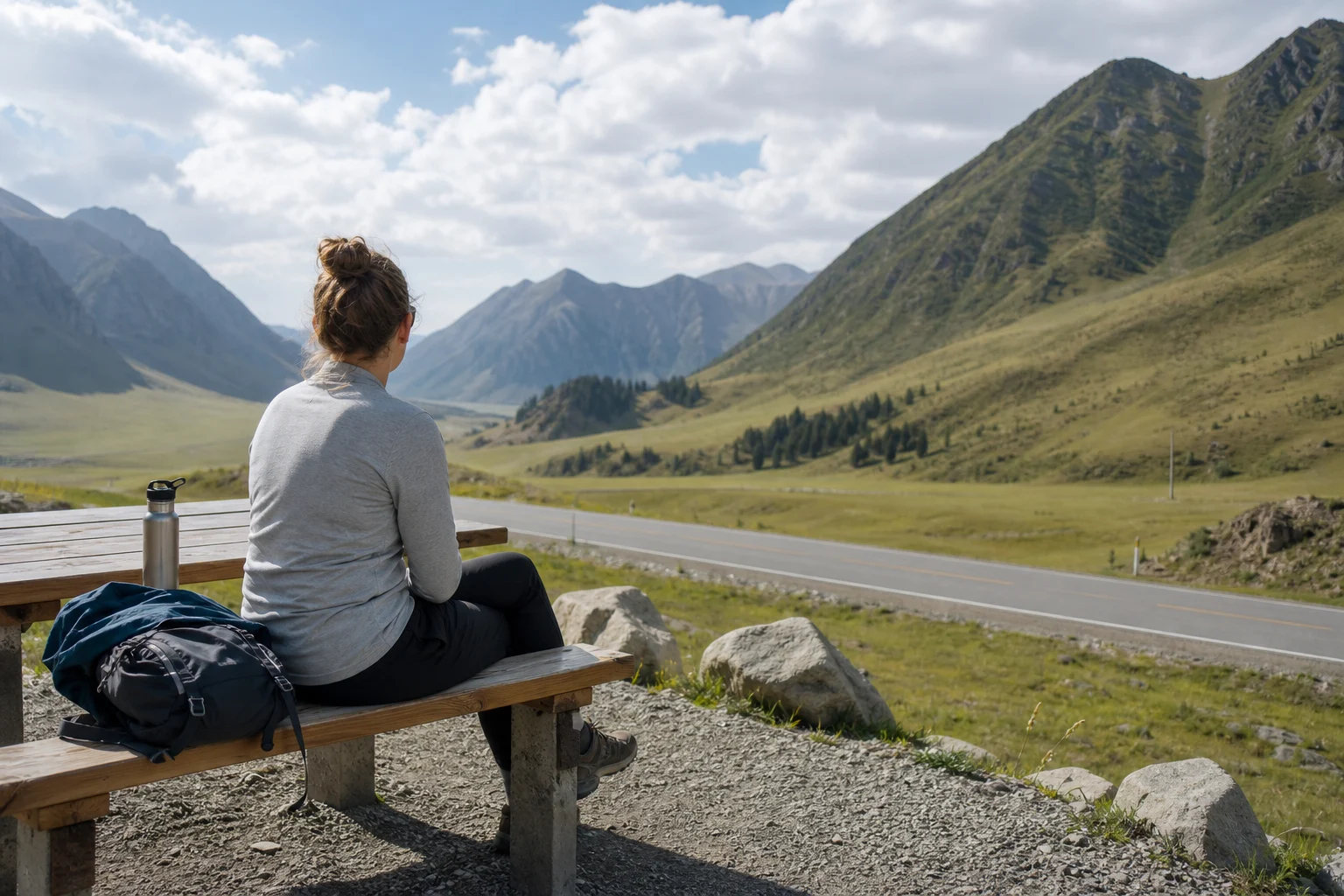
The useful estimate is not a headline number of driving hours. It is the slowest practical section plus the time needed to use the day well. A valley road may invite unplanned stops; a national-park visit can add a shuttle and walking; a late lunch can be more sensible than forcing an early check-in. Weather, road controls and construction can also change a forecast without anyone having done anything wrong.
Ask the planner to describe the day in parts: hotel departure, main transfer, scenic or cultural stop, meal, final approach and expected arrival. That makes it easier to see whether a private vehicle, a selected small group or an extra overnight is the better fit. It also stops a route from being sold as a string of attractions with the transfer time left invisible.
- Door-to-door timing, not only map distance
- Planned meal, restroom and movement breaks
- Scenic-area shuttle and walking time where applicable
- A realistic final hotel arrival rather than a rushed evening
- A route fallback if current conditions materially change
Use stops as part of the journey, not only recovery
The best rest stops are not filler. A short walk, a simple meal, a viewpoint or a chance to stretch can make a long valley or desert-edge transfer feel like a connected day rather than a transfer between two photos. Keep the plan flexible enough for an unhurried pause, but do not add a dense list of minor stops simply because the vehicle is passing them.
For this type of route, breaks should serve views, meals, restrooms and route logistics. No retail stop should be used to subsidize the price. If you are considering a private itinerary, ask which stops are genuinely useful for your group and which are optional; a couple travelling with light bags may make different choices from a family, a group with limited mobility or visitors arriving after an overnight flight.
Put the overnight on the correct side of the long transfer
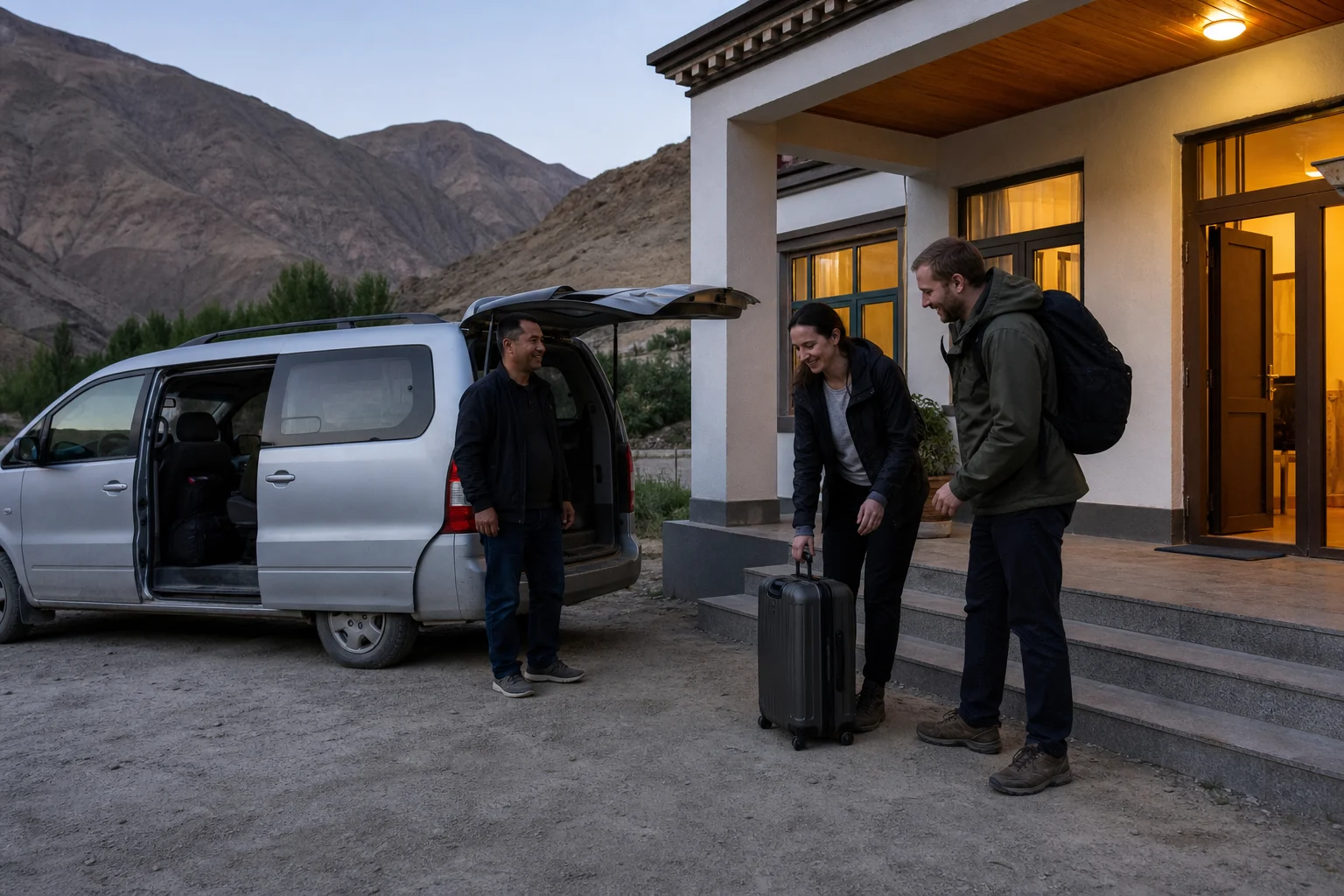
Hotel quality matters, but its position in the route often matters first. The most comfortable overnight may be a modest property that ends the long transfer at a sensible hour and gives you a calm start the next day. A larger hotel that requires an extra hour or two after dark may be the worse choice once dinner, luggage and an early departure are included.
Before payment, confirm the overnight sequence with the actual route. Ask the expected arrival window, the practical standard of the accommodation and what changes if a road condition forces a different order. This is especially valuable in mountain, grassland and longer southern sectors, where the route can be more important than the hotel brand.
Ask how a delay changes the day
A credible itinerary has a response to the ordinary uncertainties of road travel. Ask what happens if the weather changes, an access road is controlled, a scenic-area visit takes longer than expected or the group needs an extra pause. The answer does not need to promise that every stop will happen. It should make clear what can move, what can be shortened and which overnight or next-day transfer is protected.
This is particularly important for seasonal mountain routes. A route should be confirmed against current access conditions rather than copied from a summer itinerary. If a section is weather-sensitive, give the operating team enough flexibility to use a practical alternative instead of pushing the group to recover a missed photo stop.
Protect flights, mountain roads and group energy with a buffer
Do not finish a mountain or remote-road day with a same-evening flight unless the connection is genuinely protected by the route and current conditions. The safer pattern is to return to the departure city the night before, then use the final day for the airport, station or a light city plan. That one buffer can prevent a good trip from ending with a rushed transfer.
The same principle helps families and mixed-age groups. A fast itinerary may look efficient on paper, yet leave no space for lunch, a comfort stop or a slower morning after a late arrival. Tell the planner about flight timing, walking needs, children, luggage and your preference for early starts or later mornings. The right pace is not the same for every group, but it should be visible before you book.
- Keep the last overnight near the departure airport or station when a road sector comes before it
- Do not rely on one tight transfer to make a non-refundable connection
- Share mobility, family and sleep needs before the route is priced
- Ask whether a long day can be split with a practical additional overnight
Practical questions
How many hours can we drive in one Xinjiang day?
There is no useful universal cap. Judge the day by door-to-door timing, road type, scenic-area transfers, planned stops, weather exposure and the next morning rather than a single driving-hour number.
Will a private vehicle make a long Xinjiang road day short?
A private vehicle can make the pacing more flexible, but it cannot remove mountain curves, current road conditions, safety stops or the real distance between overnights.
Should I book a same-day flight after a mountain road?
Usually keep the final overnight in the departure city when a weather-sensitive or remote road sector comes before the flight. Confirm the actual route and current conditions before treating a tight connection as workable.
Do selected small-group routes make more stops?
They can have a clearer shared rhythm, but the stop pattern is still shaped by the route, group timing and current conditions. Ask which breaks are built in and which optional pauses are realistic.