Start with the trip, not the shot list
Xinjiang can offer expansive mountain valleys, grasslands, old streets, food stops and long open roads. It is tempting to build a day around a list of images to collect. A better approach is to plan a route with time for the places that genuinely interest you, then let the photographs follow the experience. That keeps the group safer, less rushed and more open to what is actually happening around you.
Tell the planner if photography matters to you. They can place a mountain viewpoint, a slower city walk or a practical rest stop at a sensible point in the day. They should not promise a specific light condition, access arrangement or photograph of a person. Weather, seasonal conditions and the real rhythm of a place are part of travel, not problems to be forced out of the schedule.
Landscape and everyday detail can tell the story first
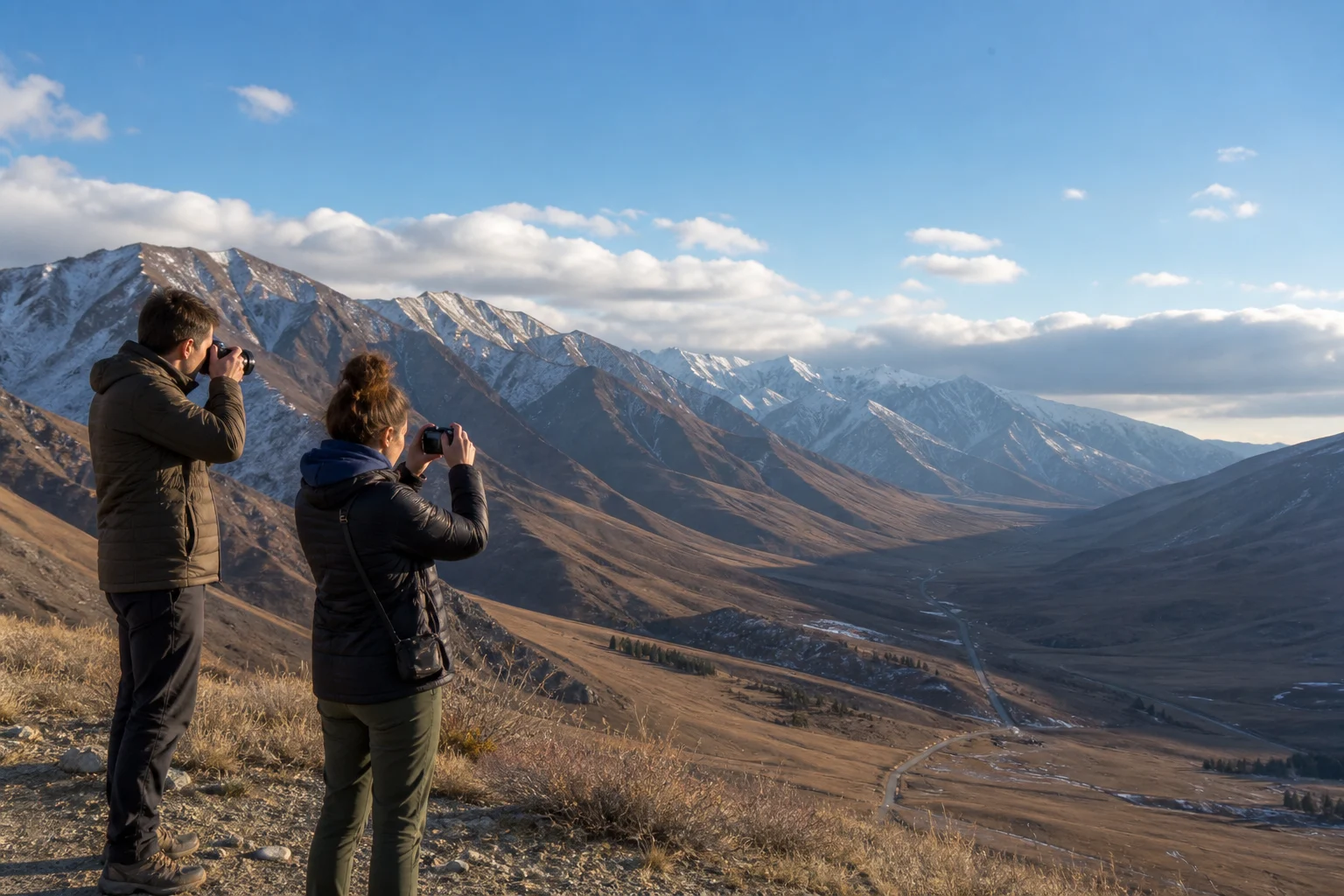
Begin with scenes that do not put anyone on display: the shape of a valley, a road curve, a meal on the table, walking shoes beside a trail or the changing sky after a transfer. These images can capture the trip without treating local residents, workers or fellow visitors as props. They also travel well across different regions, from Ili landscapes to a compact Urumqi or Kashgar city stay.
Use a small camera or phone that is easy to put away. A bulky setup can slow a group at a narrow path, busy entrance or roadside pull-off. Keep the camera secure, step back from traffic and allow the guide or driver to decide where the vehicle can safely stop. The best landscape image is not worth turning a simple road break into an unsafe one.
- Plan one or two calm photo pauses on a long transfer
- Photograph scenery, textures and food before assuming people are the subject
- Keep clear of traffic, private entrances and working spaces
- Put the camera away when the group needs to move or listen
Ask before photographing people
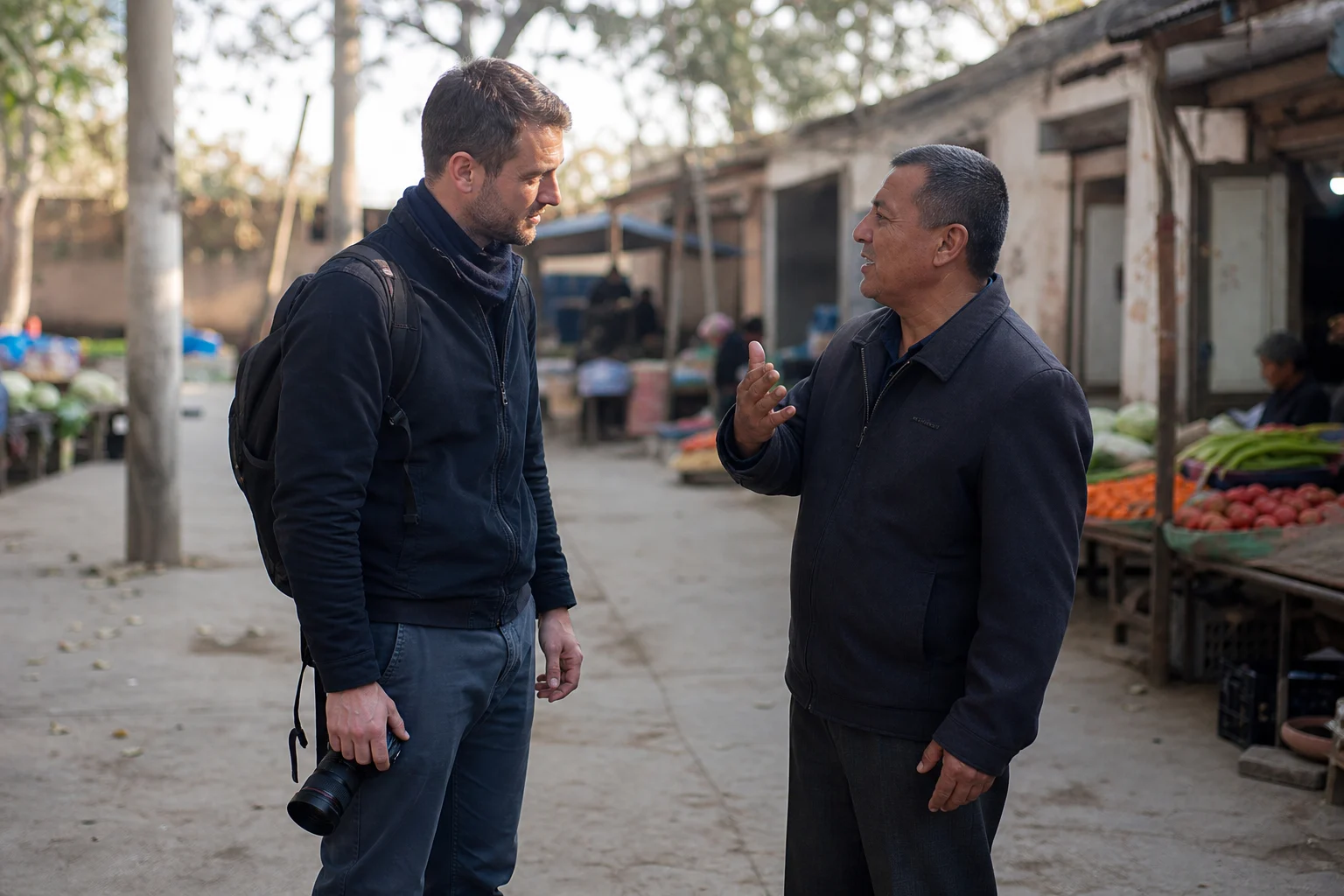
When your image would make a person the subject, ask first and accept a no without debate. A smile, an introduction through a guide or a brief question can make the interaction more comfortable; it is not a promise that the photo will be welcome. Do not photograph someone secretly, follow people for a shot or assume that a public street makes every close portrait appropriate.
Markets, restaurants, homes, places of worship and workspaces are not sets. The people there may be busy, private or simply uninterested in being photographed. Your guide can help explain the local context, but they should not pressure anyone to pose. No shopping stop is required to obtain a photograph, and a purchase never creates permission to take someone's picture.
Follow current instructions at every site
Photography rules can differ between public viewpoints, museums, transport areas, markets, hotels and places of worship. They can also change with the operating arrangement on the day. Read signage, listen to staff and ask your guide when you are unsure. If photography is not permitted, keep the camera away rather than trying a quick shot from the side.
Do not assume that a rule from another city, an old blog post or a social-media image applies to your visit. For drones, professional equipment, tripods or a planned commercial shoot, discuss the purpose in advance and confirm the current requirements through the appropriate operator or authority. This guide is about considerate travel photography, not permission for special equipment or commercial use.
- Treat staff instructions and posted rules as the decision for that place and day
- Ask before using a tripod, drone or professional-looking setup
- Do not photograph checkpoints, security activity or restricted infrastructure
- Keep any commercial, media or brand shoot separate from an ordinary tour request
Do not let the camera take over the road day
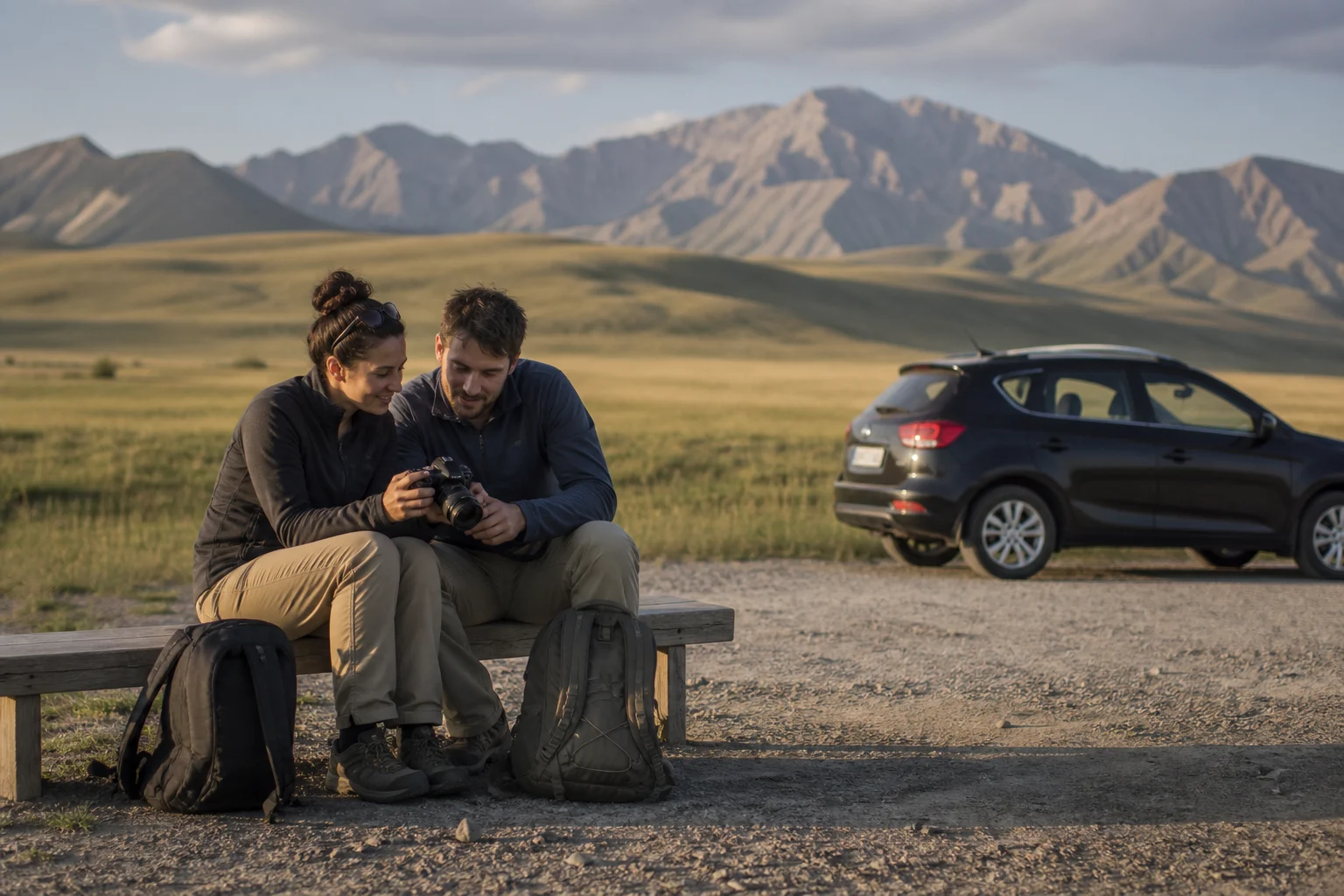
Choose a few moments to make images, then return to the shared pace. On a long transfer, repeated unplanned stops can affect meals, restroom timing and the hotel arrival for everyone in the vehicle. A private route may allow more flexibility, but it still has road conditions, light, comfort breaks and the next overnight to consider.
Review your images during a planned break instead of trying to check every frame while walking. Keep spare battery power and storage with you, but do not expect a driver or guide to solve a forgotten charger at a remote stop. This small preparation lets the trip stay focused on the place rather than the equipment.
Share photographs with the same care
Before posting, look again at images that show a person closely, a child, a private home or a sensitive moment. If you did not have clear permission, choose a landscape or a wider scene instead. Avoid captions that invent a personal story, identity or background for people you met briefly. A respectful image needs less explanation, not more.
If you travel with a group, ask before publishing photographs of fellow travelers as well. Keep the tone simple and accurate: say what you saw, not what you think a community or individual represents. That makes your photo record more useful, kinder and more likely to stay meaningful after the trip is over.
- Do not attach invented personal details to a stranger's image
- Ask before sharing close photos of companions or local residents
- Choose a wide landscape when consent is unclear
- Keep location details broad when a precise tag would be intrusive
Practical questions
Should I ask before photographing people in Xinjiang?
Yes. When a person is the subject of your image, ask first and accept a no. A guide can help with context, but should not pressure anyone to pose.
Can I photograph markets and restaurants?
Ask the person in charge and follow current staff instructions. Do not treat customers, workers or private spaces as a background for close portraits without permission.
Can I bring a drone or tripod?
Do not assume they are allowed. Discuss special equipment or a commercial purpose before travel, then confirm the current requirements for the exact location through the appropriate operator or authority.
Will a private itinerary provide unlimited photo stops?
A private route can be more flexible, but road safety, current conditions, shared timing and the next overnight still matter. Request a few worthwhile pauses rather than assuming unlimited unscheduled stops.