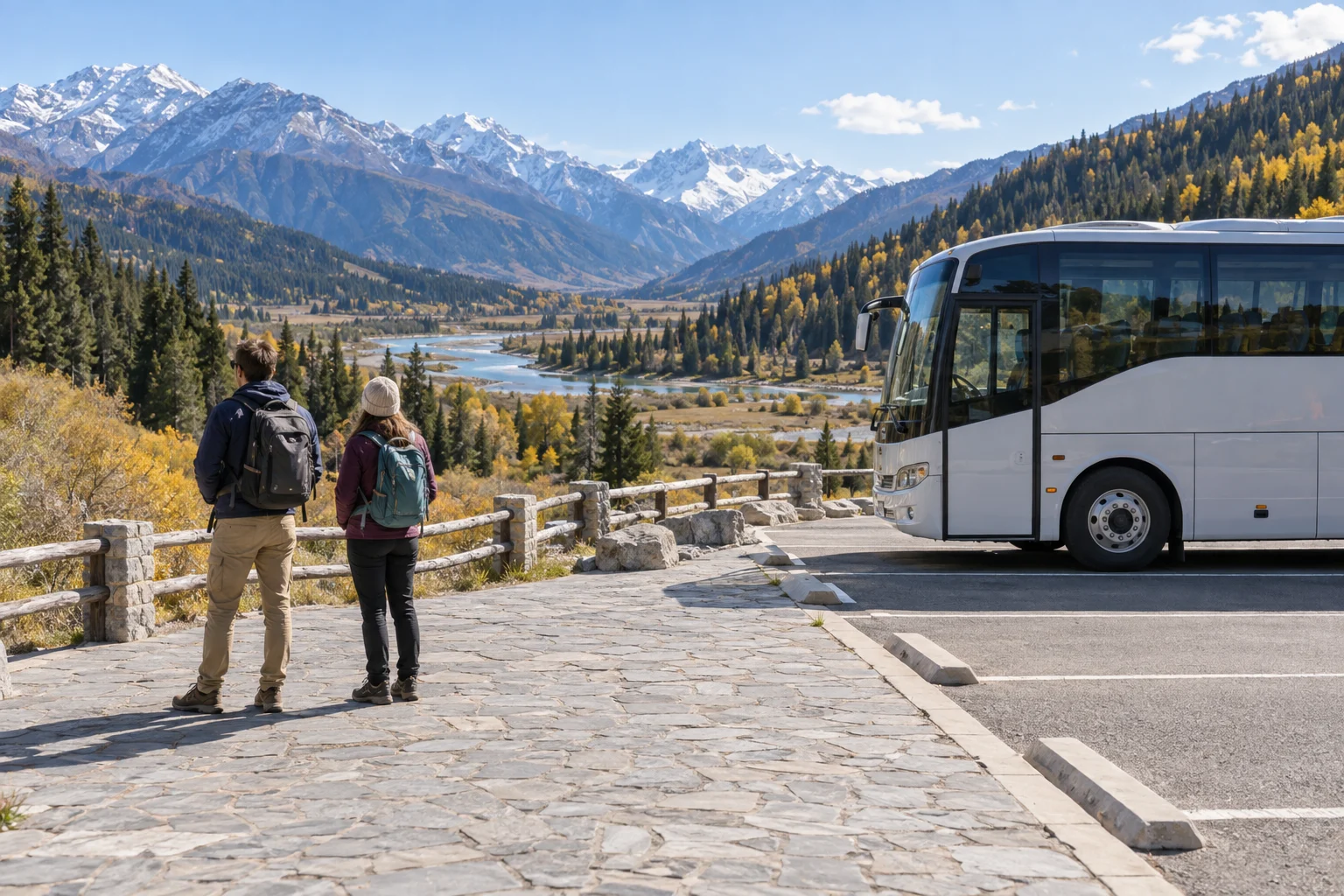
Your private road trip may have a shared middle section
A private tour can give you your own vehicle between hotels and scenic-area entrances without giving that vehicle access to every viewpoint. Inside a managed attraction, part of the visit may use an operator-run shuttle, followed by a walk. The useful question is not simply whether transport is private. It is where each kind of transport starts and ends.
Treat a scenic visit as a chain: hotel to entrance, entrance formalities, shuttle boarding, internal stops, walking, return shuttle and reunion with your driver. A comfortable road transfer only solves the first and last links. This guide helps international visitors clarify the middle links before committing to a route; it is not a current timetable or a promise of access at any named attraction.
Ask for the visit sequence, not just the attraction name
Ask your planner to describe the exact visit you are buying. Which entrance is used? Where does the private vehicle wait? Is there one internal shuttle or more than one transfer? Which stop begins the walk, and do you return to that same stop? A route described only as a visit to a famous lake or valley leaves these practical details unresolved.
Kanas offers a useful historical example of why this matters: a November 2023 Xinjiang government report described measures to improve shuttle capacity and transfer arrangements during busy periods. That report establishes that transfers are a real planning issue; it does not establish the operating pattern for your travel date. Ask the local team to reconfirm current arrangements, including any seasonal changes, before the visit.
Describe walking in surfaces, steps and return options
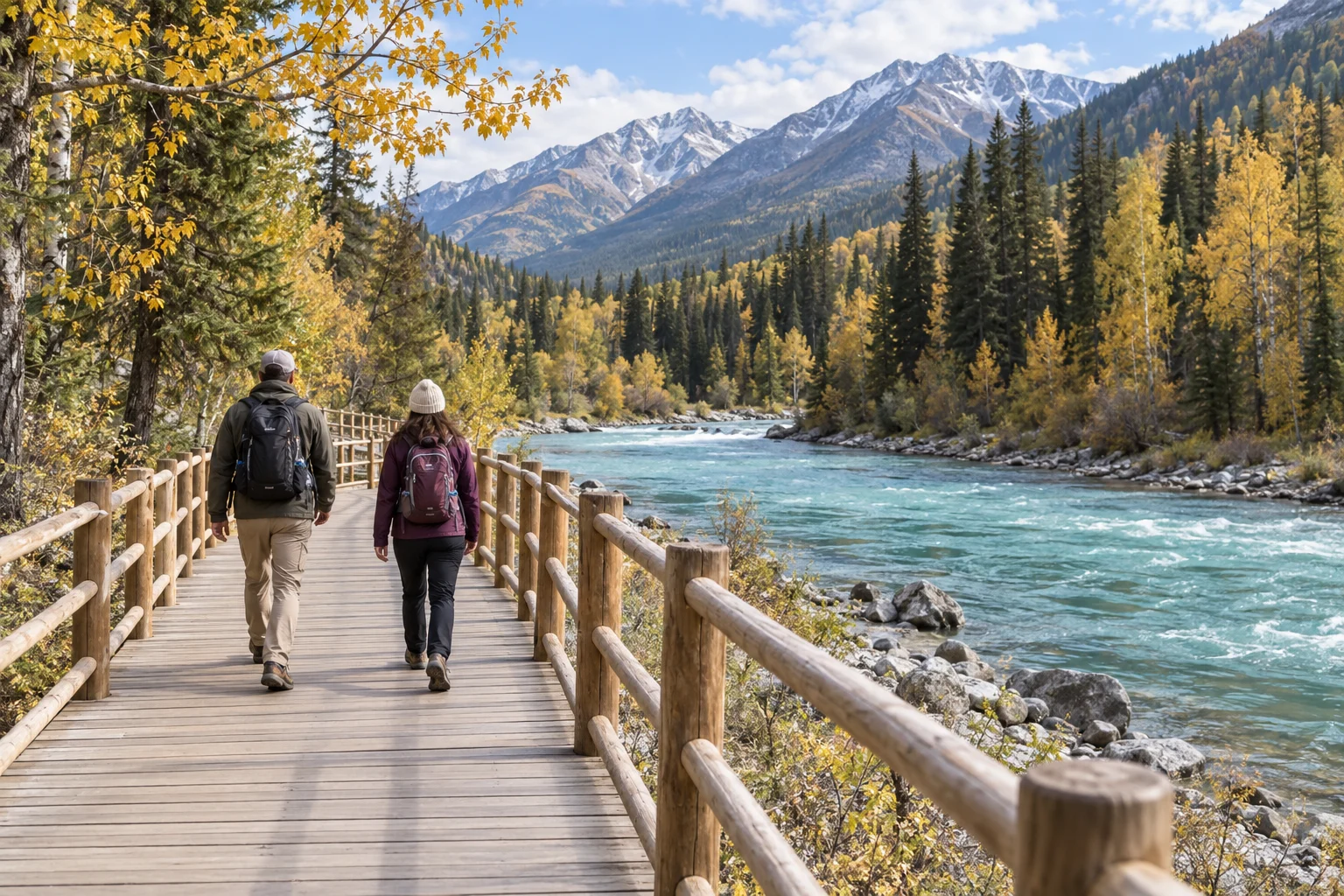
Easy walking is not a precise specification. A short staircase may be harder for one traveler than a longer level path; a boardwalk can still include steps, exposed stretches or a long walk back. Ask for approximate walking distance, unavoidable stairs or slopes, surface type and places to sit. Separate the essential walk from any optional climb to a higher viewpoint.
For a traveler using a wheelchair, walking aid or stroller, request confirmation of the whole chain rather than a general accessible label. That includes boarding the shuttle, storing equipment, reaching the path, toilets and returning to the pick-up point. Do not assume a bus has a lift or that a scenic boardwalk is step-free. If the operator cannot verify an essential requirement, choose a different visit or a shorter confirmed option.
A useful brief is specific: we are comfortable walking on level ground, but need to avoid long staircases; we would prefer a short out-and-back walk with a place to rest. That gives the planner something actionable without turning a scenic day into an endurance test.
Pack for the hours away from the private vehicle
Once you board an internal shuttle, your suitcase may remain in the road vehicle for several hours. Before separating, take the things you will actually need: the identity document required for the visit, essential personal medication, water, a light layer, rain protection, phone and power bank. Keep the bag small enough to manage while boarding and walking; avoid treating the bus as guaranteed luggage storage.
An overnight inside or near a scenic area needs a separate discussion. Ask whether the main vehicle reaches the accommodation, who handles bags if it cannot, and whether a compact overnight bag is more practical than moving a full case. Confirm any storage arrangement rather than leaving valuables in an unattended vehicle on assumption.
Agree on a return plan before chasing the final viewpoint
The return journey is part of the visit, not spare time. On the day, confirm the relevant last boarding time with the operating team, the stop and direction you need, and the meeting point with your driver. Ask which time convention is being used and save the meeting information on your phone. A photograph of the actual meeting point can be more useful than remembering a translated place name.
Keep room for a queue, a missed departure or a slower walk back. A practical plan names the first optional stop to drop if time is running short. Do not build a sunset photograph around an assumed late shuttle, and do not assume that your private driver can collect you from anywhere inside the attraction. Where mobile service is uncertain, agree in advance what to do if you cannot reach one another.
Clarify tickets and who stays with you
Ask whether the quoted price includes admission, the specific internal shuttle sectors in your planned visit and any optional transport. An attraction ticket and a transport ticket are not interchangeable terms. If you choose an extra viewpoint or activity later, ask about the additional cost before agreeing; avoid relying on an old online price list.
Also clarify guide coverage. Does an English-speaking guide accompany you through the transfers and walk, meet you only for one section, or support you remotely while the driver waits outside? None of these arrangements should be hidden behind the phrase private tour. Choose the support level that matches your confidence navigating unfamiliar stops and your group’s needs.
Send this short brief with your route request
Start with your travel dates, chosen region, group size and walking preferences. Then ask for the following details for each major scenic day. The goal is not to eliminate all uncertainty: weather and local operations can change. It is to know which parts are confirmed and what simpler alternative is available.
Our planning focus is private and selected 2–6 person routes for international visitors, with no compulsory shopping. Share the views you care about most and the walking you would prefer to avoid; a well-chosen shorter visit can be more rewarding than collecting every shuttle stop. The two images in this guide are AI-generated travel illustrations, not documentary photographs or proof of specific transport or accessibility facilities.
- Private-vehicle drop-off and pick-up points
- Internal shuttle sectors and ticket inclusions
- Essential walking distance, surface, stairs and shorter alternatives
- Who accompanies us and how we contact the driver
- Day-bag or overnight-luggage arrangements
- Return timing and the optional stop to omit if delayed
Practical questions
Does a private Xinjiang tour avoid all shared buses?
No. A private vehicle between hotels and attraction entrances does not guarantee access inside a managed scenic area. Confirm the internal shuttle arrangements for each planned visit.
Can we visit scenic areas without long hikes?
Ask for a route with confirmed short walks and optional longer sections. Check surfaces, unavoidable steps and the return distance rather than relying on an easy-walking label.
Are scenic shuttle tickets included in our tour?
Only the written quote can establish that. Ask it to identify admission, internal shuttle sectors and optional transport separately.
Can we leave our day bags in the private vehicle?
You may be separated from the road vehicle for several hours. Carry essential documents, personal medication, water, weather layers and communication items, and confirm any luggage-storage arrangement.